Safety training that every worker understands, in their own language.
The same reviewed lesson in each worker's language, with a short check in that same language and a one-page record of who understood what. It supports the training your qualified trainer gives; it does not replace it.
- Learners
- Workers who speak other languages than the site's, their team leaders, trainers and safety officers
- Typical topics
- Fire exits and evacuation, Lifting and moving loads by hand, Reporting a near miss or an injury, Checking that the message was understood
- Sample module
- First week at the warehouse: safe and understood
01 Topics
What we usually cover
- 1 Fire exits and evacuation
- 2 Lifting and moving loads by hand
- 3 Reporting a near miss or an injury
- 4 Checking that the message was understood
Any other subject works the same way: from your documents or from a brief.
02 Formats
What works best for these learners
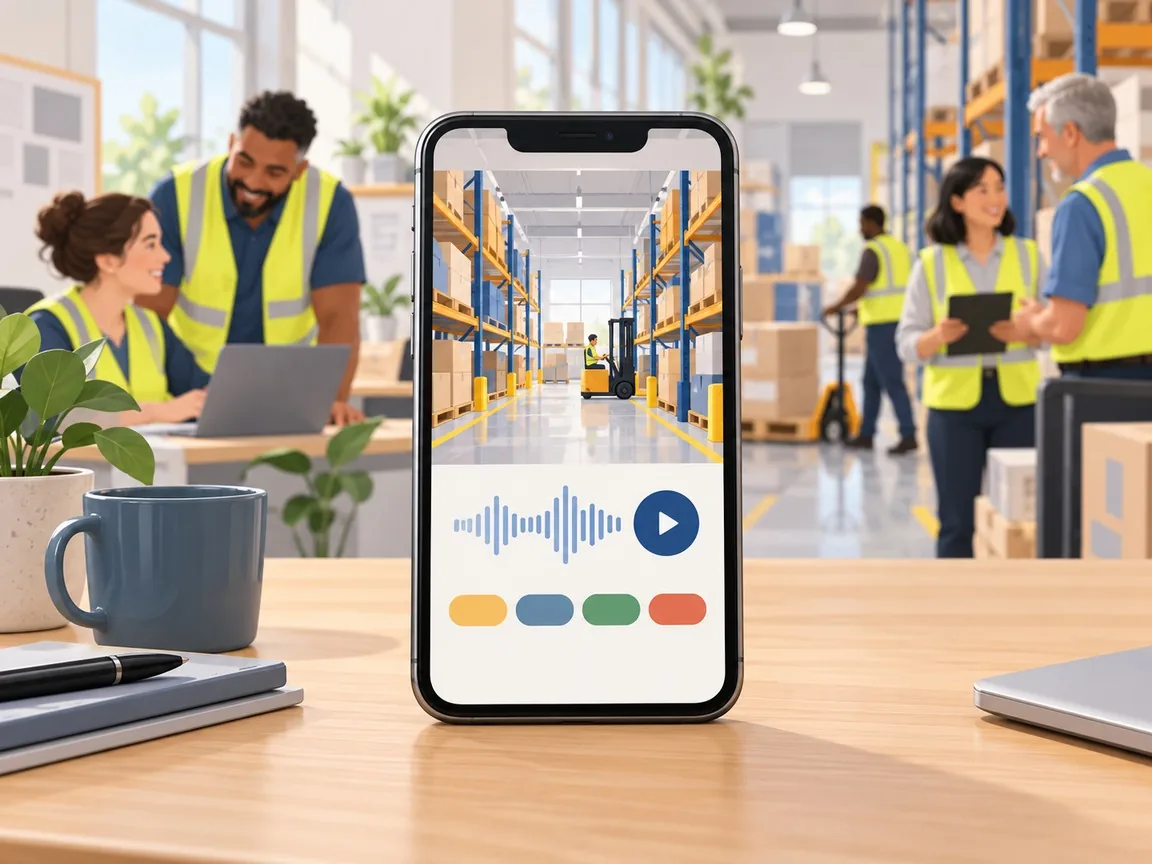
Lessons in each worker's language
Text, narration and pictures, all made from one reviewed script.

Comprehension check
A few questions and answers in the same language as the lesson.
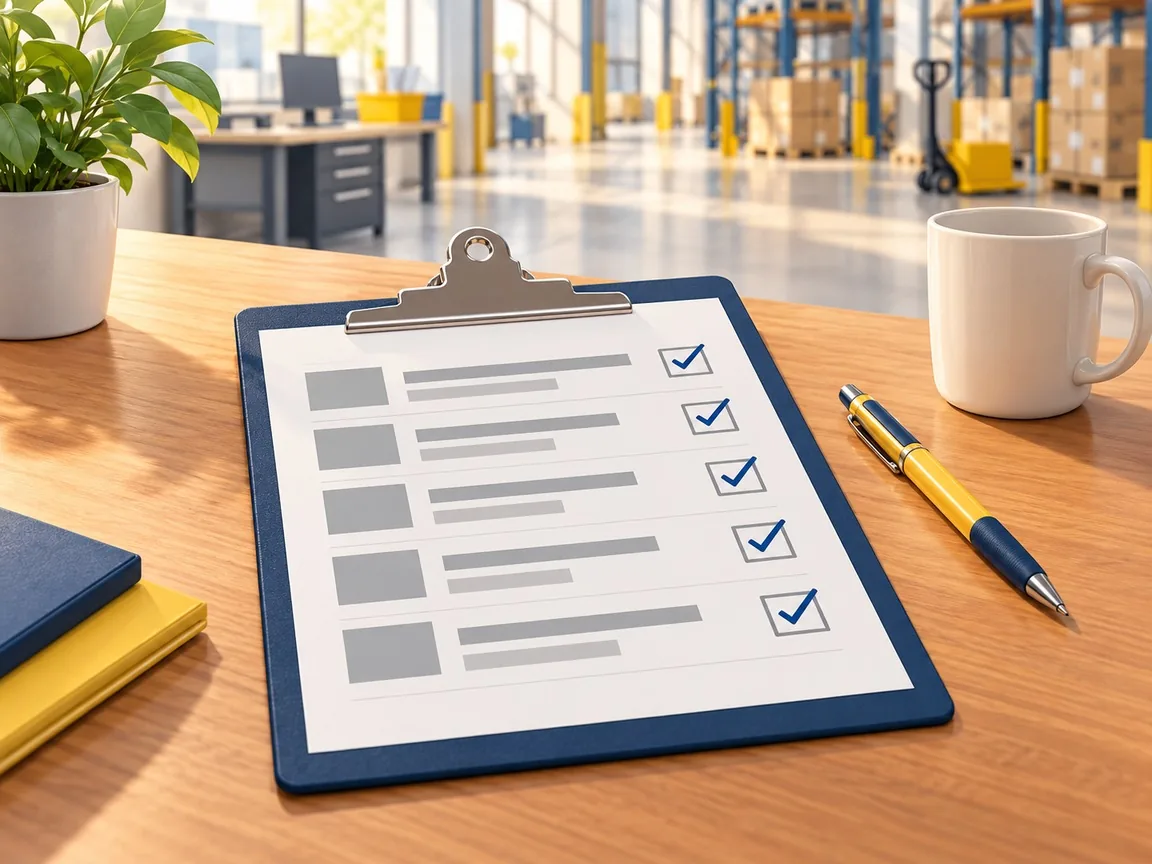
Record sheet
One page: who, which language, when and what was checked, to print or file.
03 Sample module
First week at the warehouse: safe and understood
-
1
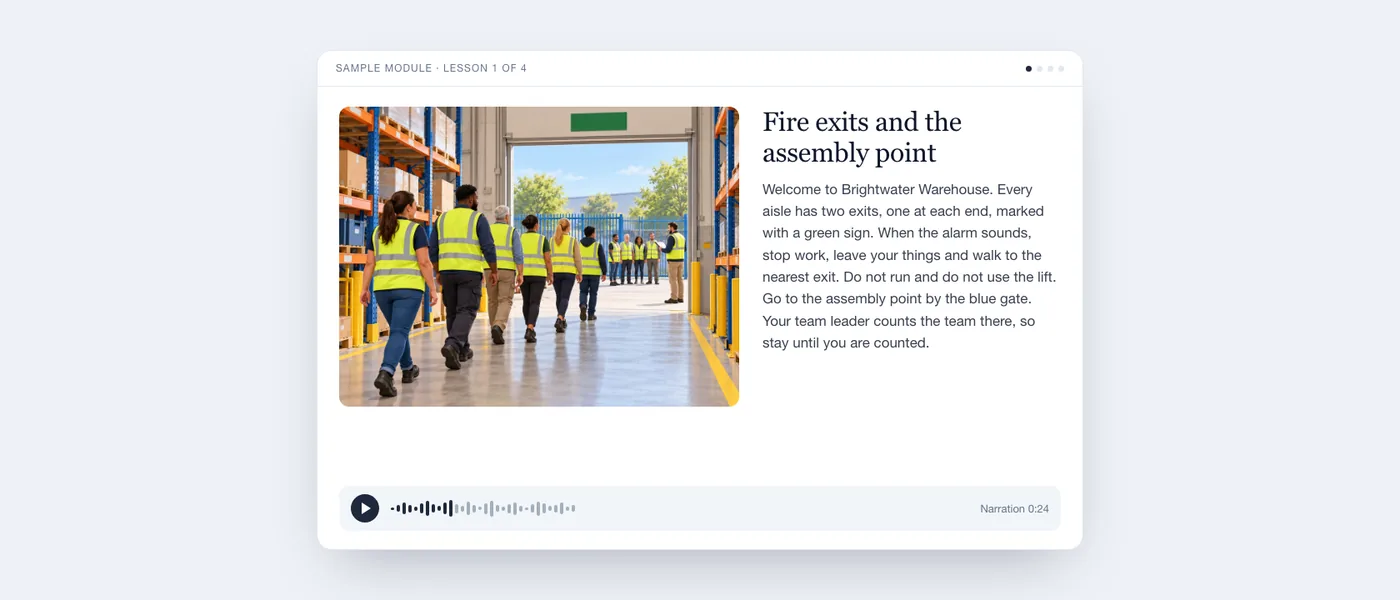
Fire exits and the assembly point
Welcome to Brightwater Warehouse. Every aisle has two exits, one at each end, marked with a green sign. When the alarm sounds, stop work, leave your things and walk to the nearest exit. Do not run and do not use the lift. Go to the assembly point by the blue gate. Your team leader counts the team there, so stay until you are counted.
Narration, 0:24 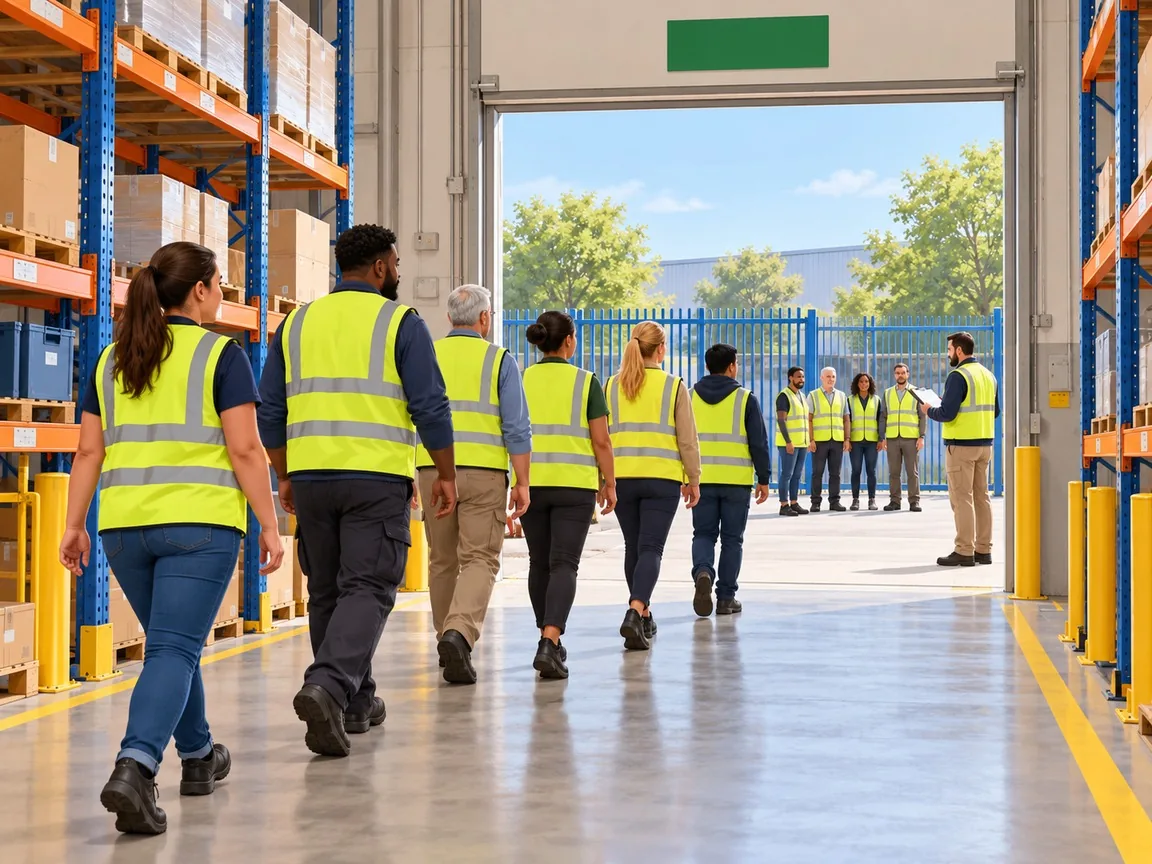
-
2
Lifting and moving loads by hand
Before you lift a box, look at it and check that the way is clear. Keep your back straight, bend your knees and hold the load close to your body. Turn with your feet, not with your waist. Never lift more than twenty kilograms alone. For a heavier load, ask a colleague or use the trolley. If a box feels too heavy, put it down and ask.
Narration, 0:24 
-
3
Near misses and injuries: who to tell
A near miss is something that could have hurt someone but did not, like a box that slipped or a wet floor. Tell your team leader or the first-aider the same day. If you are hurt, even a little, say so at once. Nobody is blamed for reporting. A report today can stop an injury tomorrow.
Narration, 0:21 
-
4
Check what you understood
Three quick questions.
One. Where do you go when the alarm sounds?
To the assembly point by the blue gate.
Two. How do you carry a heavy box?
Back straight, load close to the body, and never more than twenty kilograms alone.
Three. Whom do you tell first after a near miss?
Your team leader or the first-aider, the same day.
Narration, 0:26 
Demos for other sectors
- Nurseries and preschools Picture cards and stories read aloud, for children who cannot read yet. See the demo
- Primary and secondary schools Lessons that follow the curriculum, with checks and accessible versions. See the demo
- Vocational institutes Real work situations, explained step by step. See the demo
- Factories and manufacturing Work instructions operators understand on their first shift. See the demo
- Tech and IT companies Onboarding and product knowledge, written from your own docs. See the demo
- Health and safety training Mandatory topics told through the situations your people face. See the demo
- Healthcare and care homes Clear procedures for teams that work in shifts. See the demo
- Retail and customer service Product and service training for every store and every new hire. See the demo
- Marketing and creative teams Brand rules and agency know-how that new creatives learn in days, not months. See the demo
- Public administration and municipalities Clear answers for citizens, for the website, the lobby screen and the counter. See the demo
- Sports clubs, associations and events Rules and briefings that every participant understands before the start. See the demo
- Youth sports clubs: safeguarding and parents The club's code of conduct, explained to coaches, parents and young athletes. See the demo
- Another sector? Tell us who has to learn what, and we will tell you how we would do it. Contact us
Tell us what your people need to learn.
A 30 minute call is enough to understand whether it fits, and to give you a scope and a price for a pilot module.
- Company
-
ITALIO SRL
Via Emilia Ospizio 16, 42122 Reggio Emilia (RE), Italy