Clear procedures for teams that work in shifts.
Short lessons that fit between shifts: hygiene protocols, patient handling, talking with families. Every piece is checked by a subject expert before it reaches your staff.
- Learners
- Nurses, care workers, reception and support staff
- Typical topics
- Hand hygiene and infection control, Safe patient handling, Communicating with patients and families, Privacy at the front desk
- Sample module
- Infection control on the ward
01 Topics
What we usually cover
- 1 Hand hygiene and infection control
- 2 Safe patient handling
- 3 Communicating with patients and families
- 4 Privacy at the front desk
Any other subject works the same way: from your documents or from a brief.
02 Formats
What works best for these learners
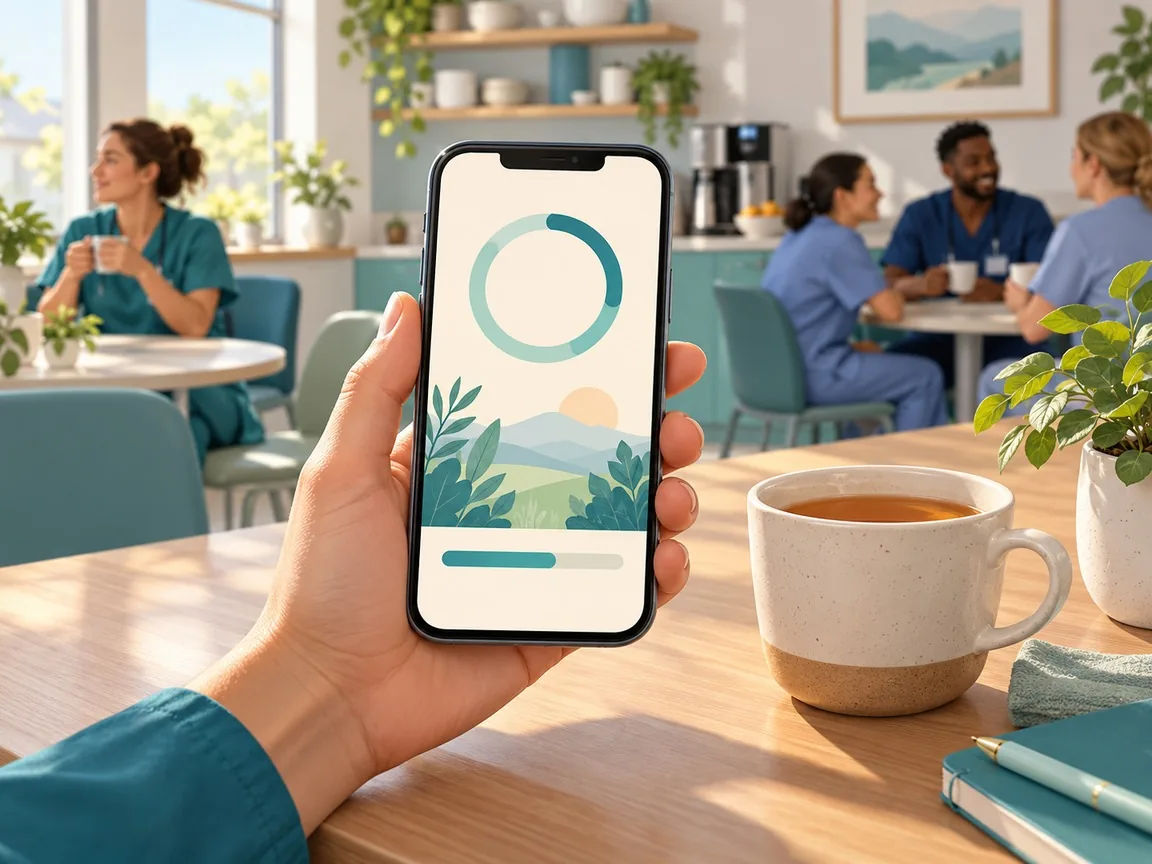
Five-minute lessons
One protocol per lesson, easy to finish during a break.

Audio versions
To listen on the way to work.
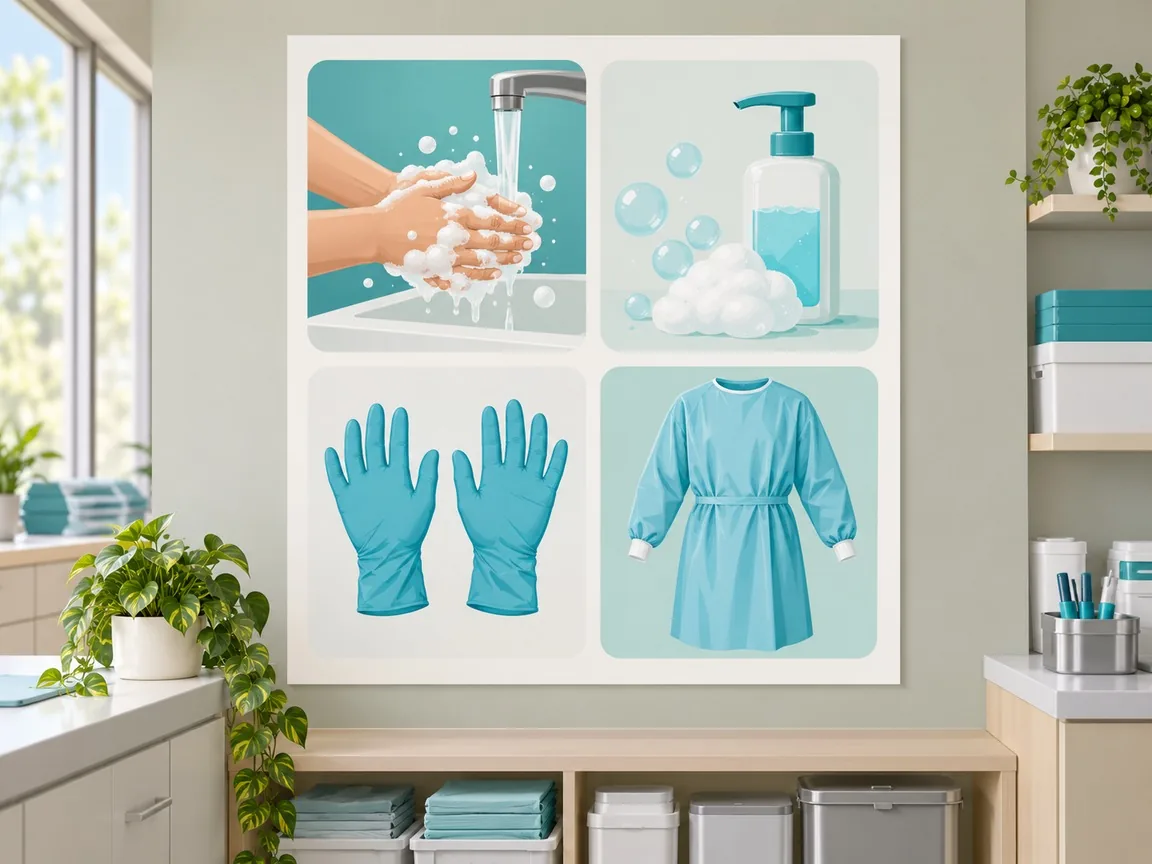
Illustrated protocols
Printable, for the ward and the staff room.
03 Sample module
Infection control on the ward
-
1
The five moments for hand hygiene
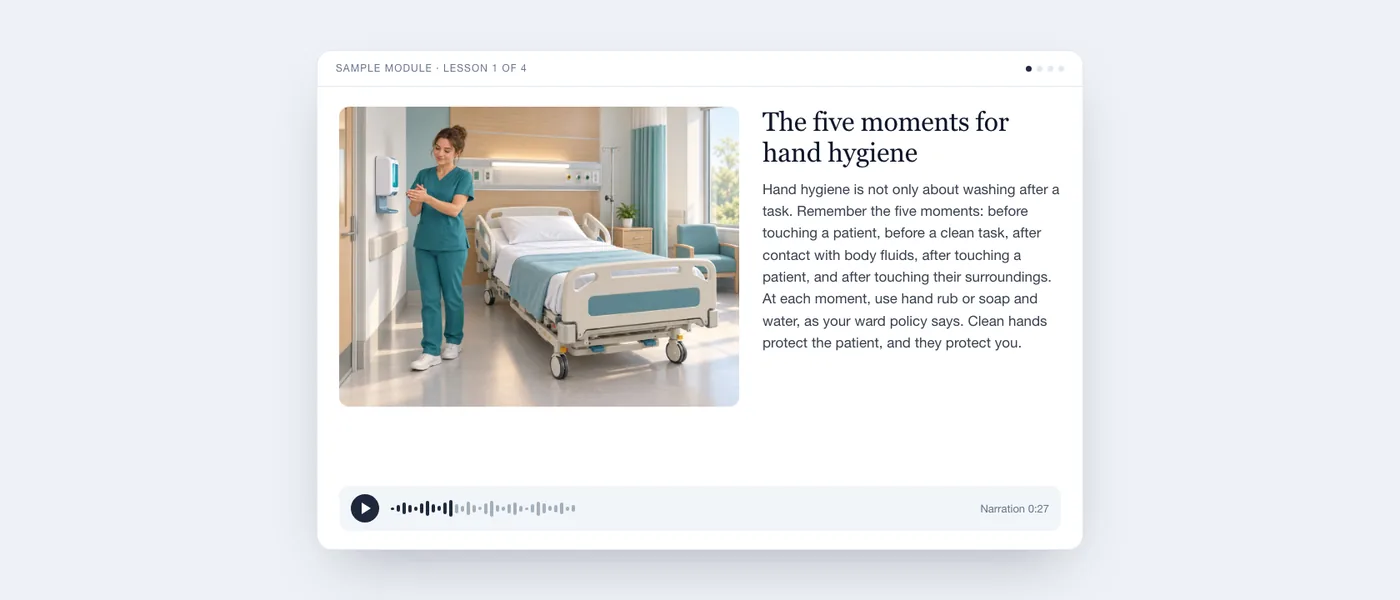
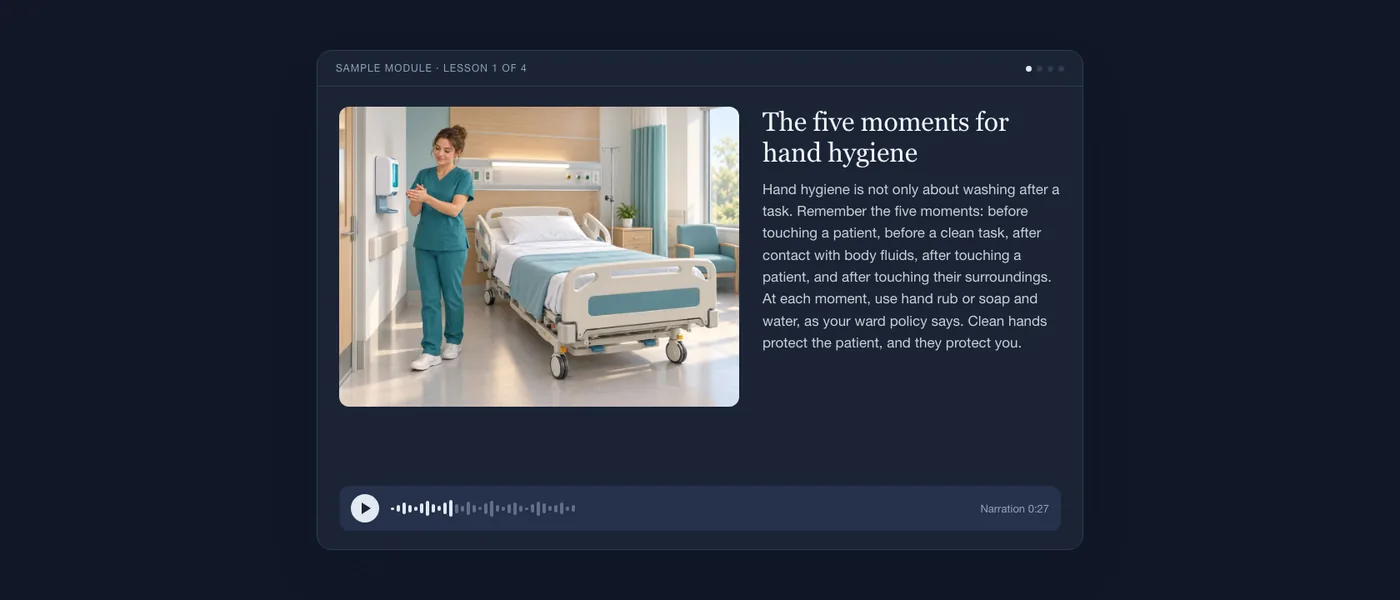
Hand hygiene is not only about washing after a task. Remember the five moments: before touching a patient, before a clean task, after contact with body fluids, after touching a patient, and after touching their surroundings. At each moment, use hand rub or soap and water, as your ward policy says. Clean hands protect the patient, and they protect you.
Narration, 0:27 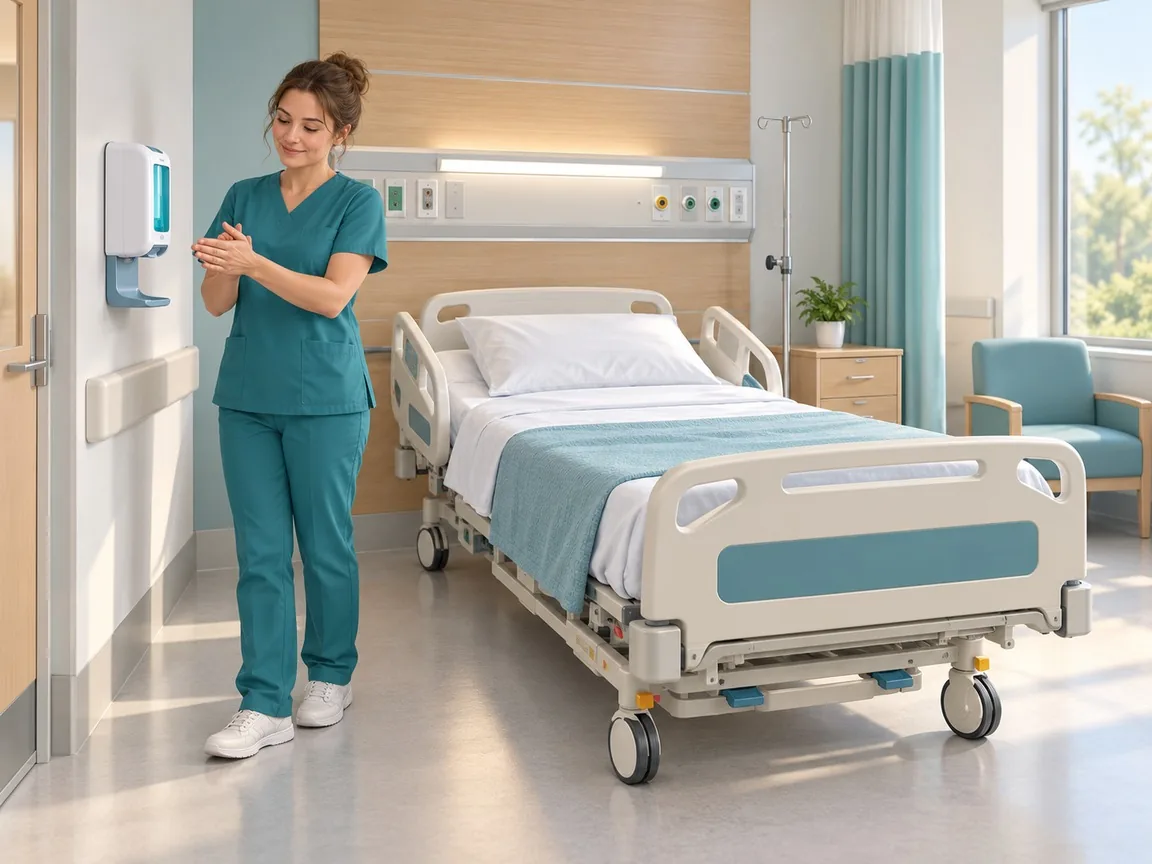
-
2
Putting on and taking off protective equipment
Protective equipment only works when it goes on and comes off in the right order. Clean your hands first, then put on each item in the order shown on your ward poster. When you finish, take off the most contaminated items first, such as gloves, and clean your hands again. Take your time, and ask a colleague to check you.
Narration, 0:21 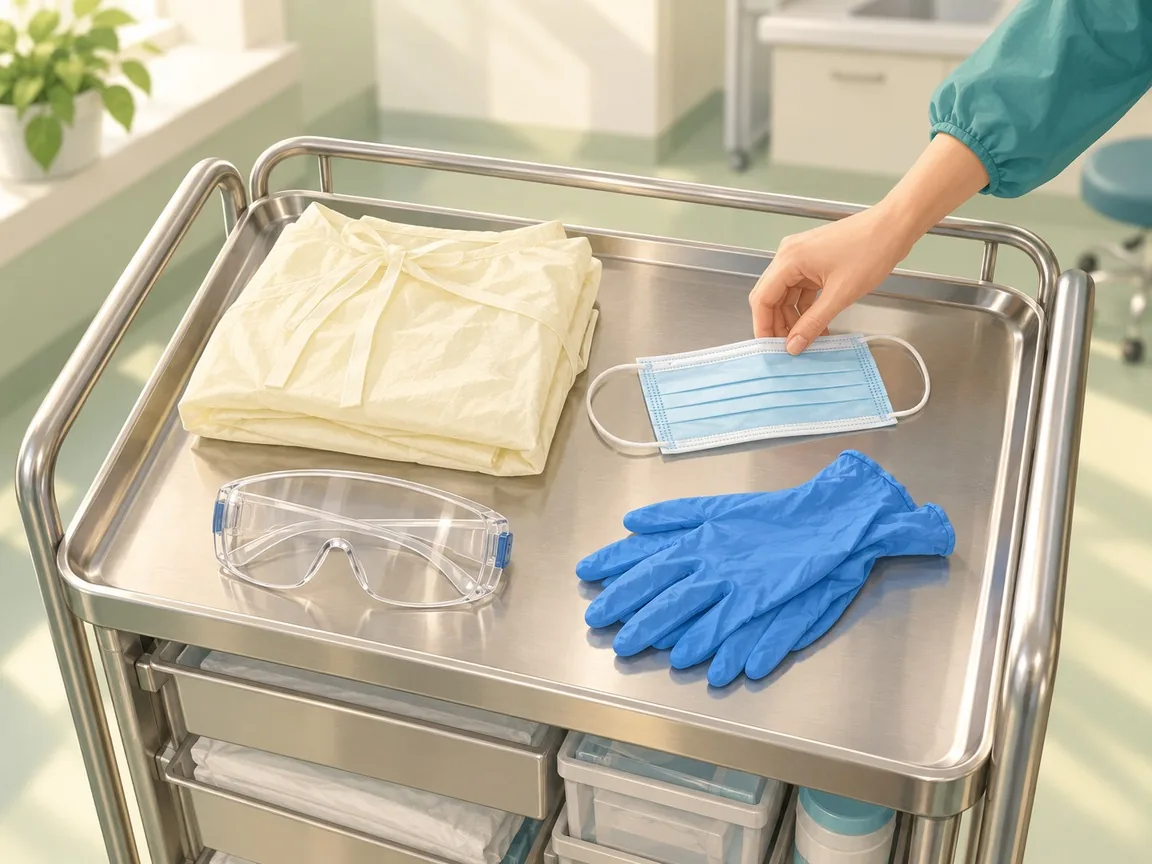
-
3
Handling linen and waste
Used linen and waste can carry germs, so handle them as little as possible. Put used linen straight into the correct bag at the bedside, and never shake it or hold it against your uniform. Sort waste into the right bin where you use it. Do not overfill bags, and clean your hands when you finish.
Narration, 0:20 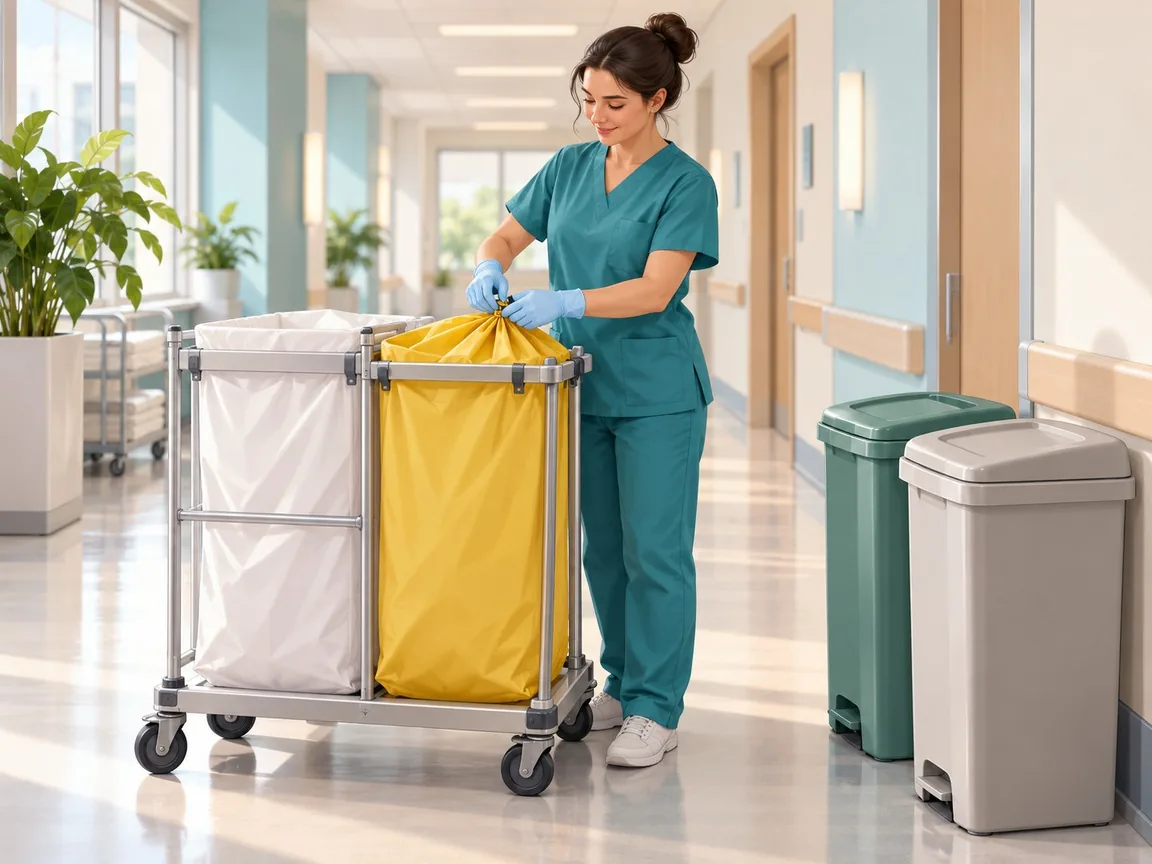
-
4
Choose the right order
Here is a short exercise. You are leaving a patient's room, wearing gloves, a gown and a mask. Stop and think: which item comes off first, and when do you clean your hands? Say the order to yourself, then check it against the poster on your ward. The right order protects you and the next patient.
Narration, 0:21 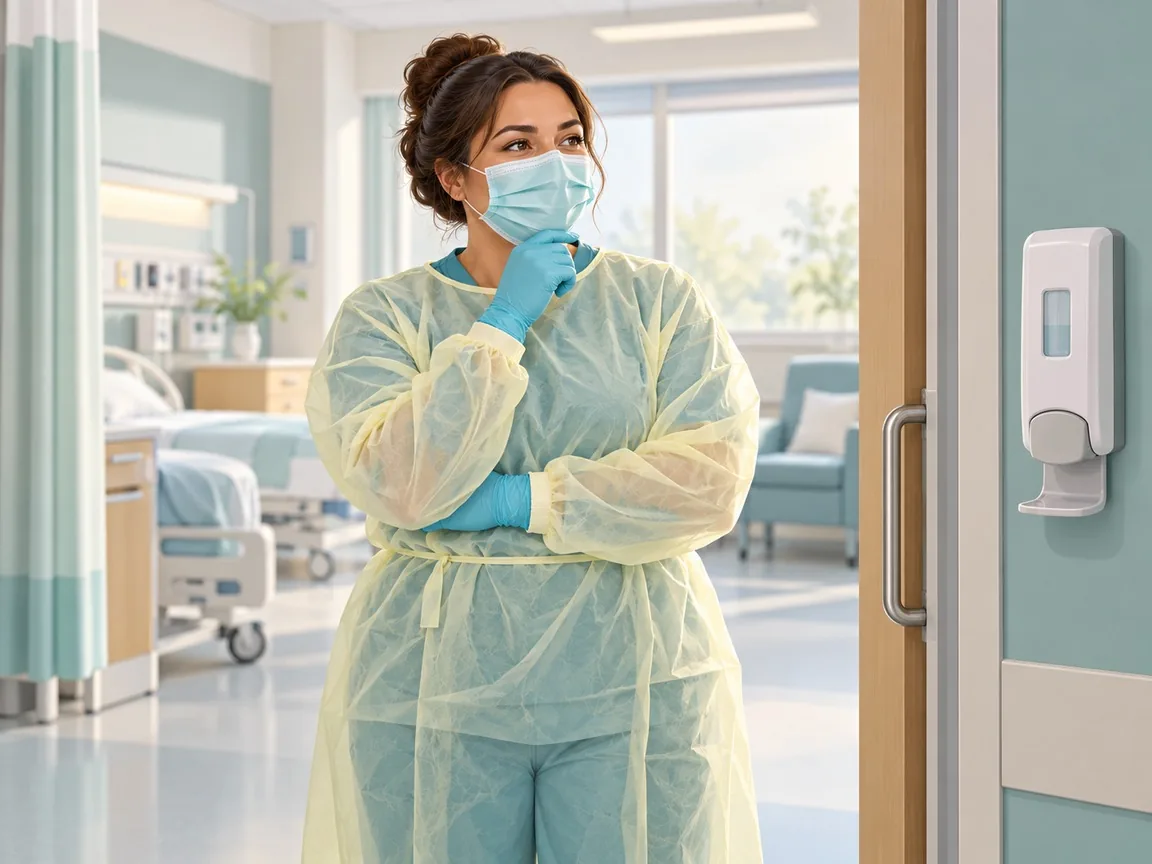
Demos for other sectors
- Nurseries and preschools Picture cards and stories read aloud, for children who cannot read yet. See the demo
- Primary and secondary schools Lessons that follow the curriculum, with checks and accessible versions. See the demo
- Vocational institutes Real work situations, explained step by step. See the demo
- Factories and manufacturing Work instructions operators understand on their first shift. See the demo
- Tech and IT companies Onboarding and product knowledge, written from your own docs. See the demo
- Health and safety training Mandatory topics told through the situations your people face. See the demo
- Retail and customer service Product and service training for every store and every new hire. See the demo
- Marketing and creative teams Brand rules and agency know-how that new creatives learn in days, not months. See the demo
- Public administration and municipalities Clear answers for citizens, for the website, the lobby screen and the counter. See the demo
- Sports clubs, associations and events Rules and briefings that every participant understands before the start. See the demo
- Safety and compliance for multilingual teams Safety lessons that every worker understands, in their own language. See the demo
- Youth sports clubs: safeguarding and parents The club's code of conduct, explained to coaches, parents and young athletes. See the demo
- Another sector? Tell us who has to learn what, and we will tell you how we would do it. Contact us
Tell us what your people need to learn.
A 30 minute call is enough to understand whether it fits, and to give you a scope and a price for a pilot module.
- Company
-
ITALIO SRL
Via Emilia Ospizio 16, 42122 Reggio Emilia (RE), Italy