Safety training people remember when it matters.
Mandatory topics told through the situations your people actually face, with checks that show what was understood. Built on the rules that apply to you and approved by your safety officer before it is published.
- Learners
- Employees in any sector who need initial or refresher safety training
- Typical topics
- Fire and emergency procedures, Manual handling and ergonomics, Working at height and in confined spaces, Chemical and biological risks
- Sample module
- Evacuation procedure
01 Topics
What we usually cover
- 1 Fire and emergency procedures
- 2 Manual handling and ergonomics
- 3 Working at height and in confined spaces
- 4 Chemical and biological risks
Any other subject works the same way: from your documents or from a brief.
02 Formats
What works best for these learners
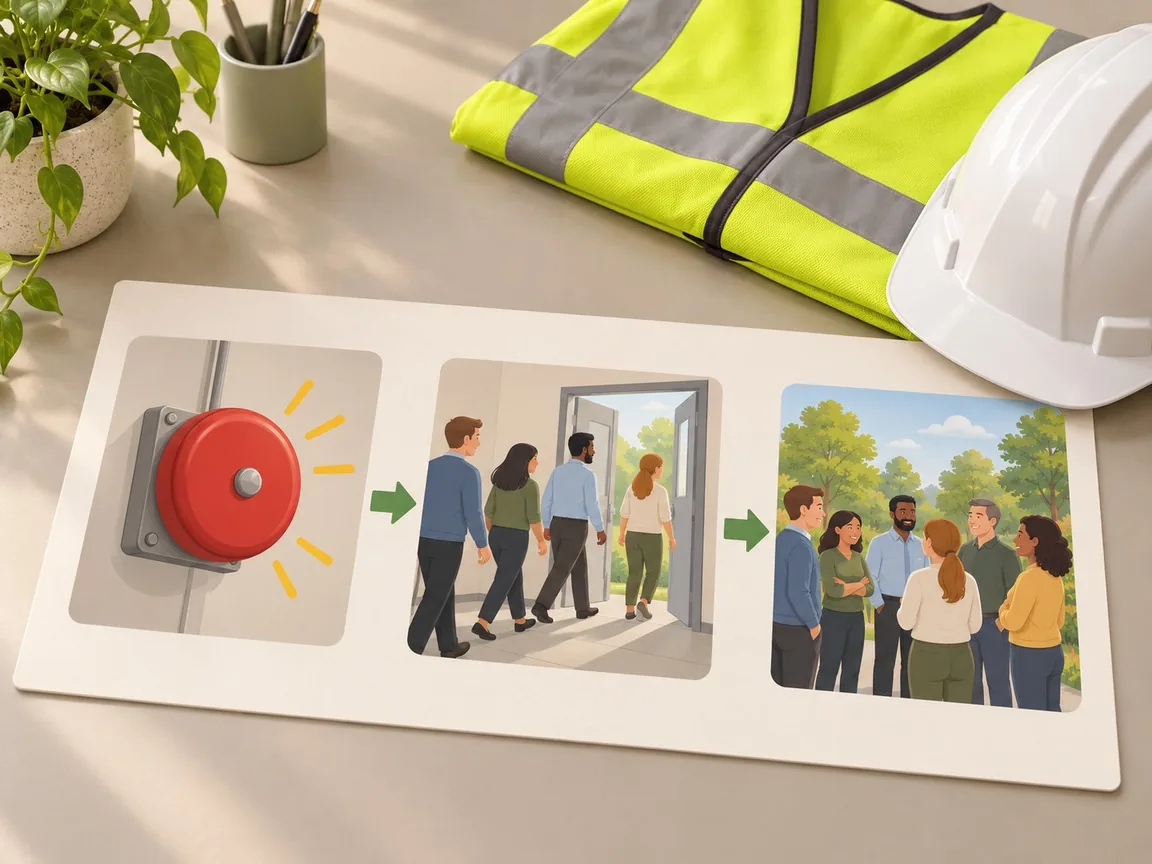
Scenario-based lessons
A real situation, the right action, and why.
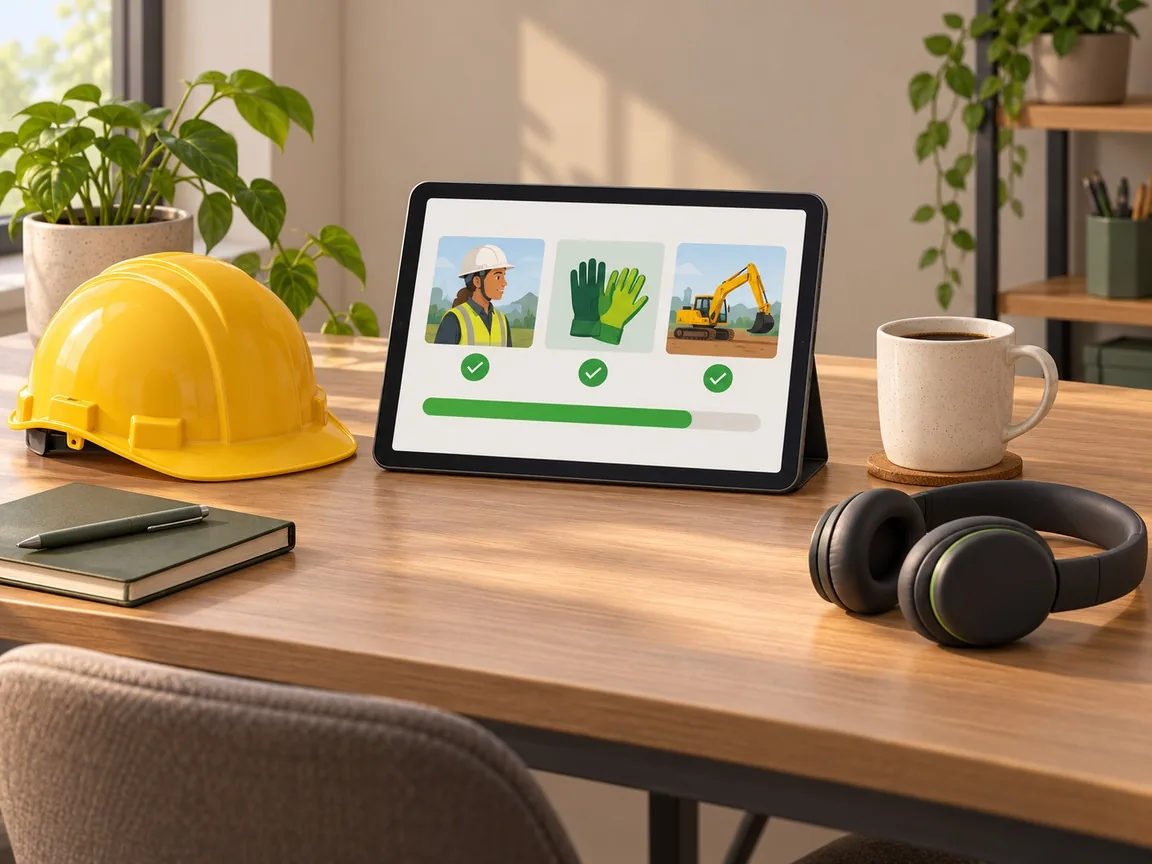
Refresher modules
Short modules for the yearly refresh, without repeating everything.
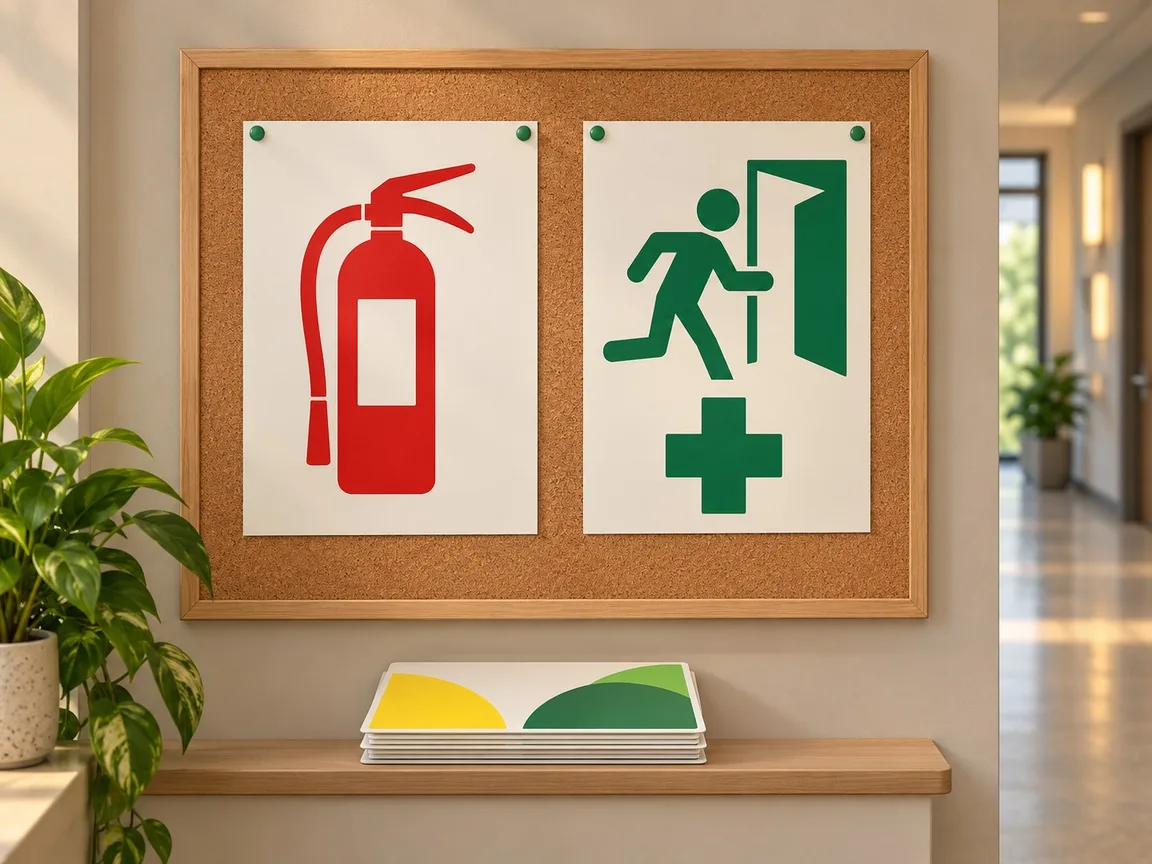
Posters and quick cards
Printable summaries for the noticeboard and the workstation.
03 Sample module
Evacuation procedure
-
1
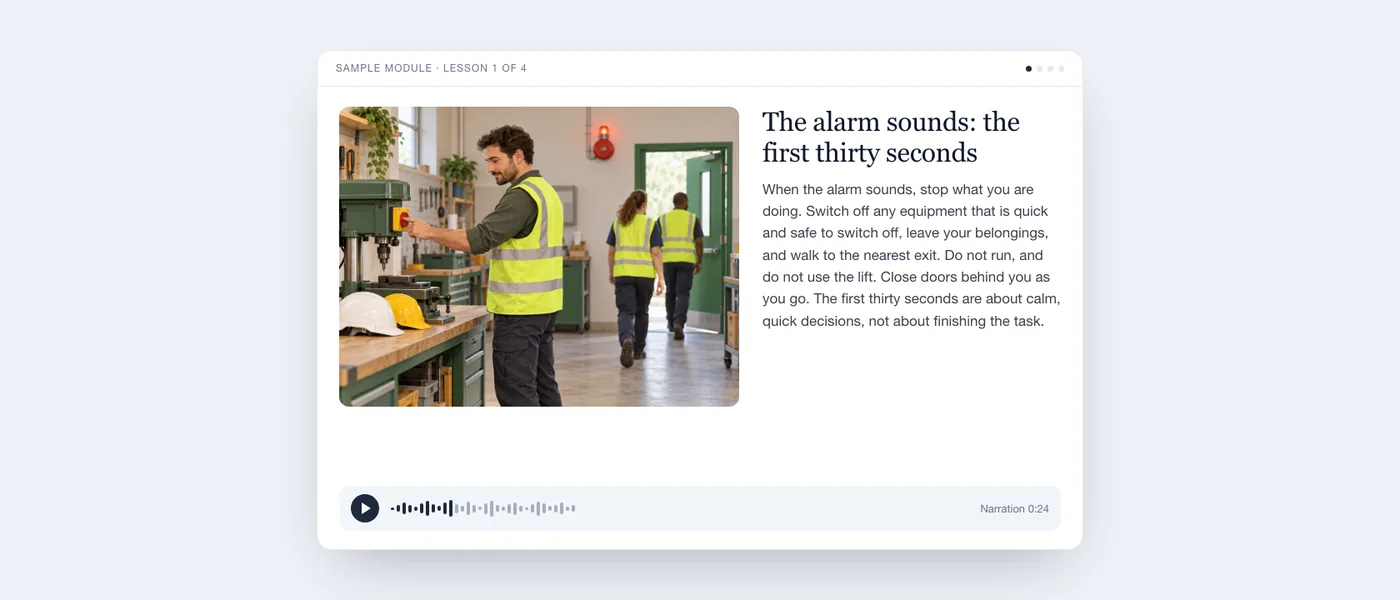
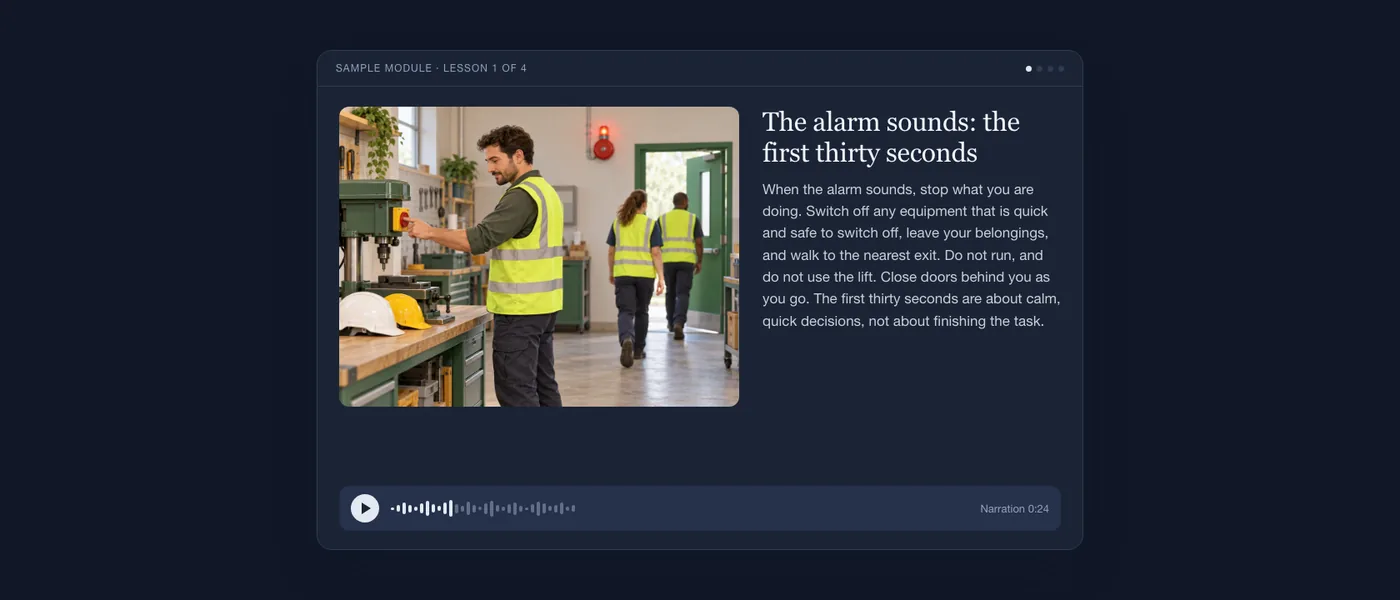
The alarm sounds: the first thirty seconds
When the alarm sounds, stop what you are doing. Switch off any equipment that is quick and safe to switch off, leave your belongings, and walk to the nearest exit. Do not run, and do not use the lift. Close doors behind you as you go. The first thirty seconds are about calm, quick decisions, not about finishing the task.
Narration, 0:24 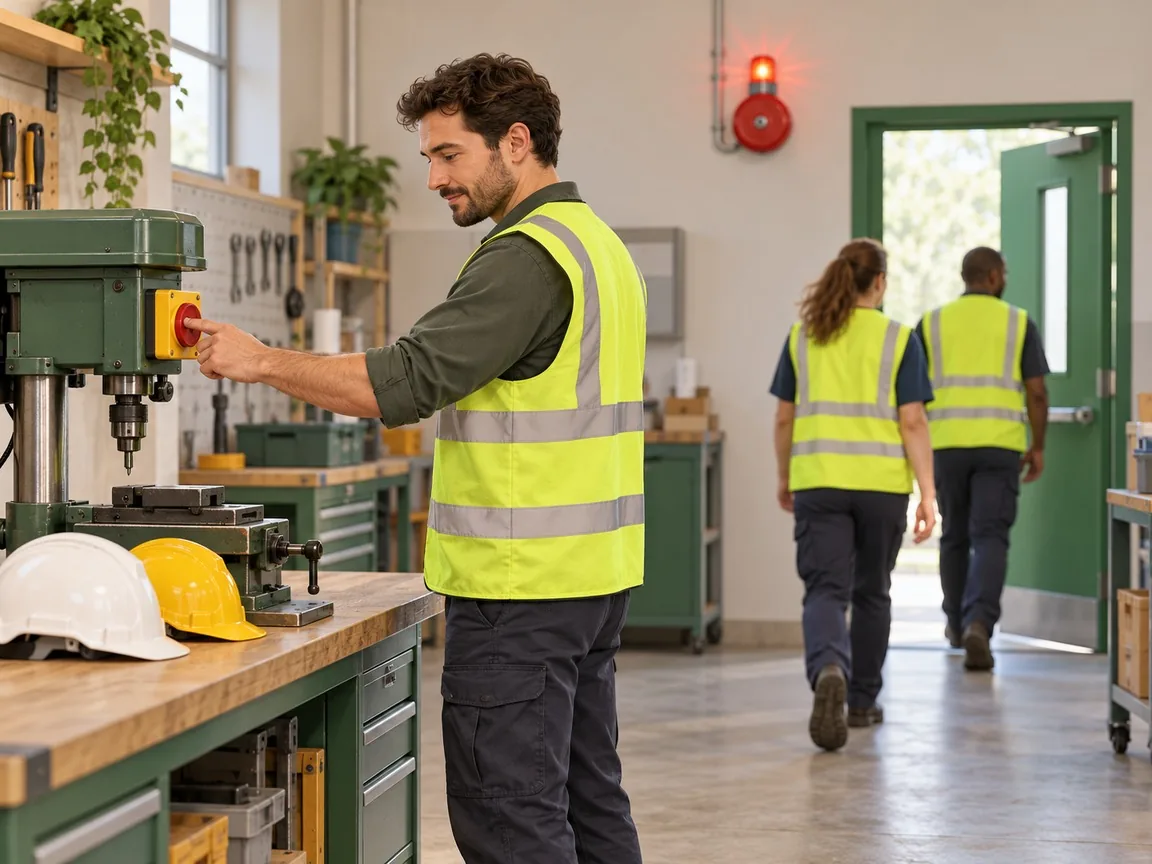
-
2
Routes, exits and assembly points
Know two ways out of every area you work in: the nearest exit, and a second route in case the first is blocked. Follow the green exit signs and keep doors and stairwells clear. Walk to the assembly point outside, well away from the building and from the road emergency vehicles will use. Stay there until your team leader has counted everyone.
Narration, 0:23 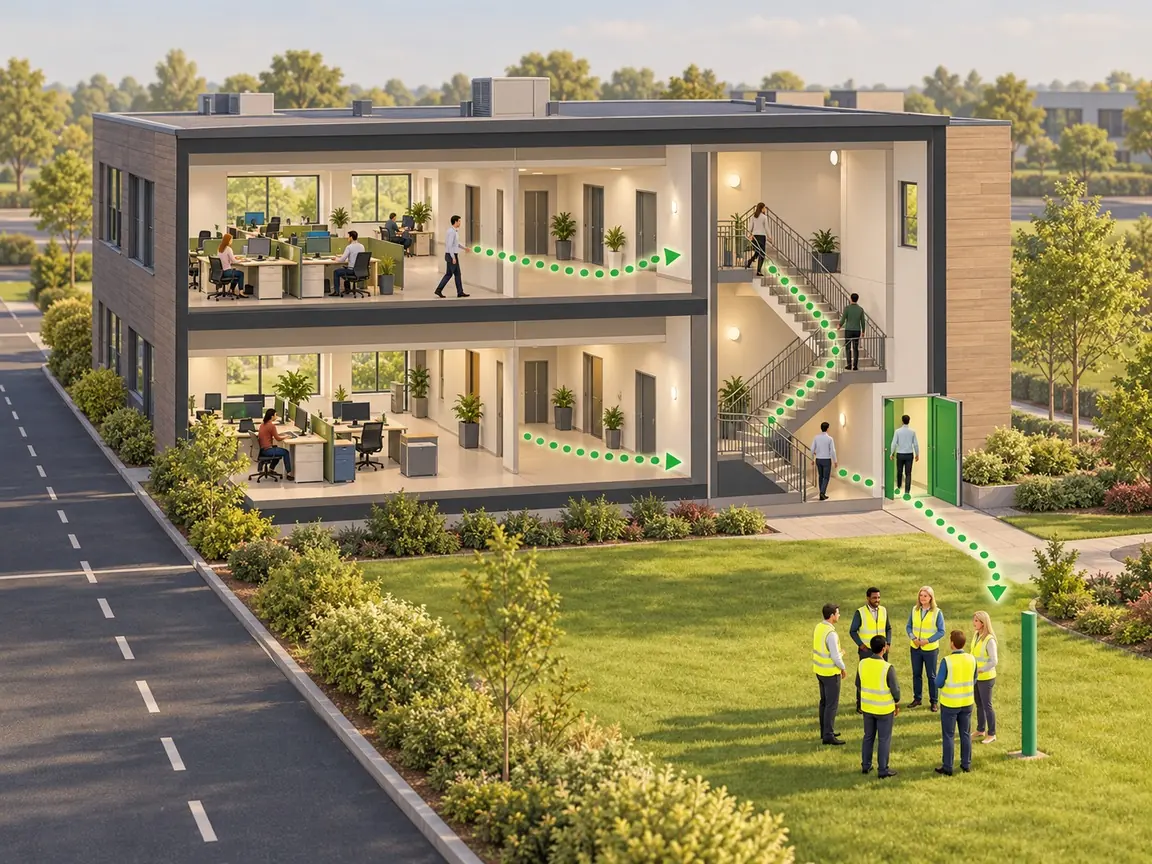
-
3
Helping colleagues and visitors
On the way out, look around. Tell colleagues who may not have heard the alarm, and offer help to anyone who needs it. Stay with visitors and guide them to the exit, because they do not know the building. Never put yourself at risk. If someone cannot use the stairs, take them to a safe waiting place and tell your team leader exactly where they are.
Narration, 0:22 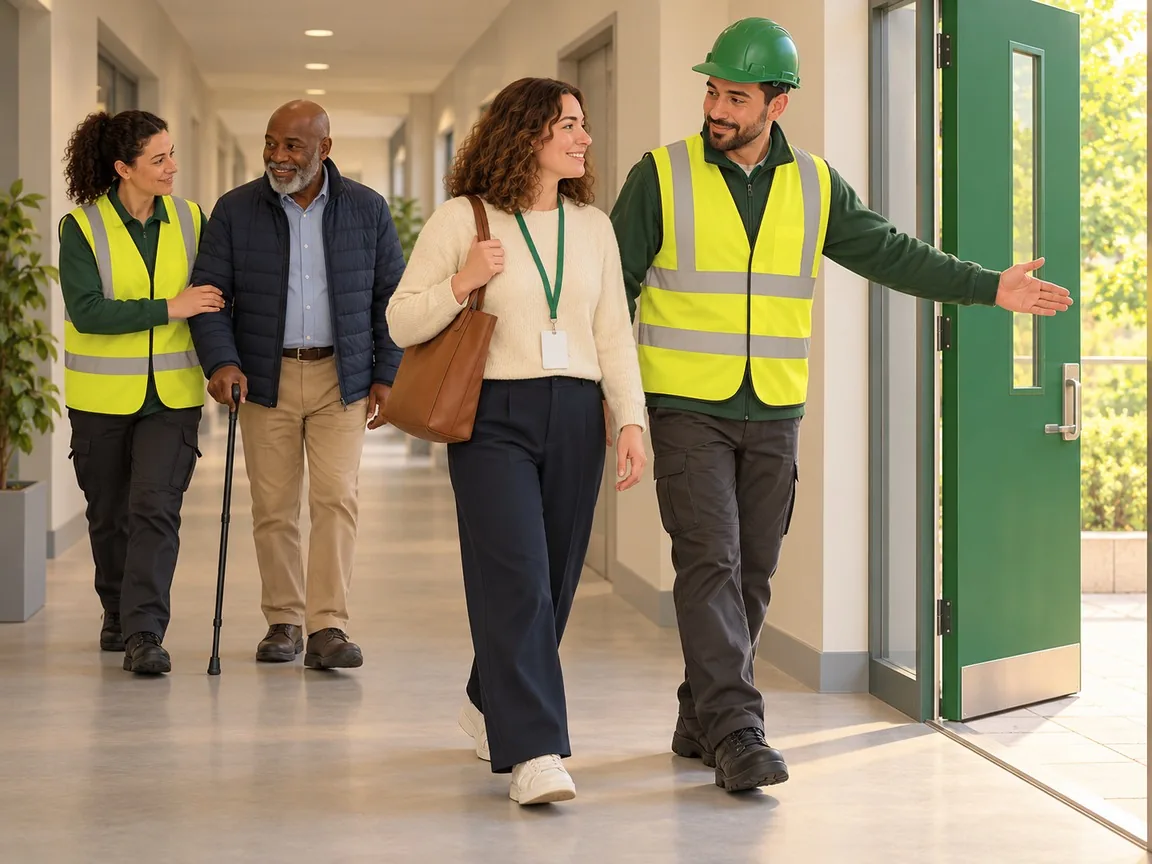
-
4
What is wrong in this picture?
Look at the corridor in the picture. Boxes are stacked in front of the exit door, a chair holds the fire door open, and the extinguisher is half hidden behind a trolley. Each one slows people down or hides equipment when seconds count. Which one would you fix first, and who would you tell?
Narration, 0:19 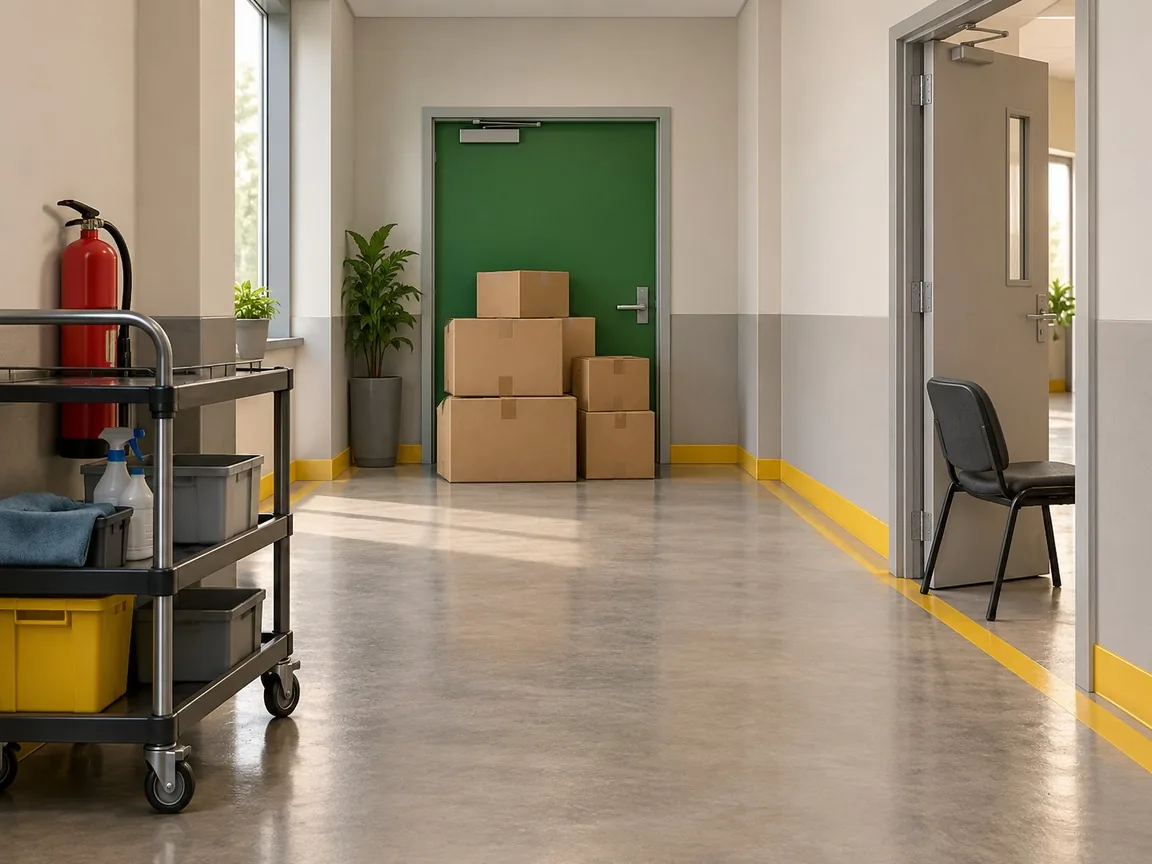
Demos for other sectors
- Nurseries and preschools Picture cards and stories read aloud, for children who cannot read yet. See the demo
- Primary and secondary schools Lessons that follow the curriculum, with checks and accessible versions. See the demo
- Vocational institutes Real work situations, explained step by step. See the demo
- Factories and manufacturing Work instructions operators understand on their first shift. See the demo
- Tech and IT companies Onboarding and product knowledge, written from your own docs. See the demo
- Healthcare and care homes Clear procedures for teams that work in shifts. See the demo
- Retail and customer service Product and service training for every store and every new hire. See the demo
- Marketing and creative teams Brand rules and agency know-how that new creatives learn in days, not months. See the demo
- Public administration and municipalities Clear answers for citizens, for the website, the lobby screen and the counter. See the demo
- Sports clubs, associations and events Rules and briefings that every participant understands before the start. See the demo
- Safety and compliance for multilingual teams Safety lessons that every worker understands, in their own language. See the demo
- Youth sports clubs: safeguarding and parents The club's code of conduct, explained to coaches, parents and young athletes. See the demo
- Another sector? Tell us who has to learn what, and we will tell you how we would do it. Contact us
Tell us what your people need to learn.
A 30 minute call is enough to understand whether it fits, and to give you a scope and a price for a pilot module.
- Company
-
ITALIO SRL
Via Emilia Ospizio 16, 42122 Reggio Emilia (RE), Italy