Lessons that follow the curriculum and hold a class's attention.
Content aligned with the subject and the age of the class, with a check after every lesson and accessible versions for pupils with specific learning needs.
- Learners
- Pupils from 6 to 18, with their teachers
- Typical topics
- Science, history and geography, Digital citizenship and online safety, Civic and environmental education, Study skills and reading comprehension
- Sample module
- How the water cycle works
01 Topics
What we usually cover
- 1 Science, history and geography
- 2 Digital citizenship and online safety
- 3 Civic and environmental education
- 4 Study skills and reading comprehension
Any other subject works the same way: from your documents or from a brief.
02 Formats
What works best for these learners
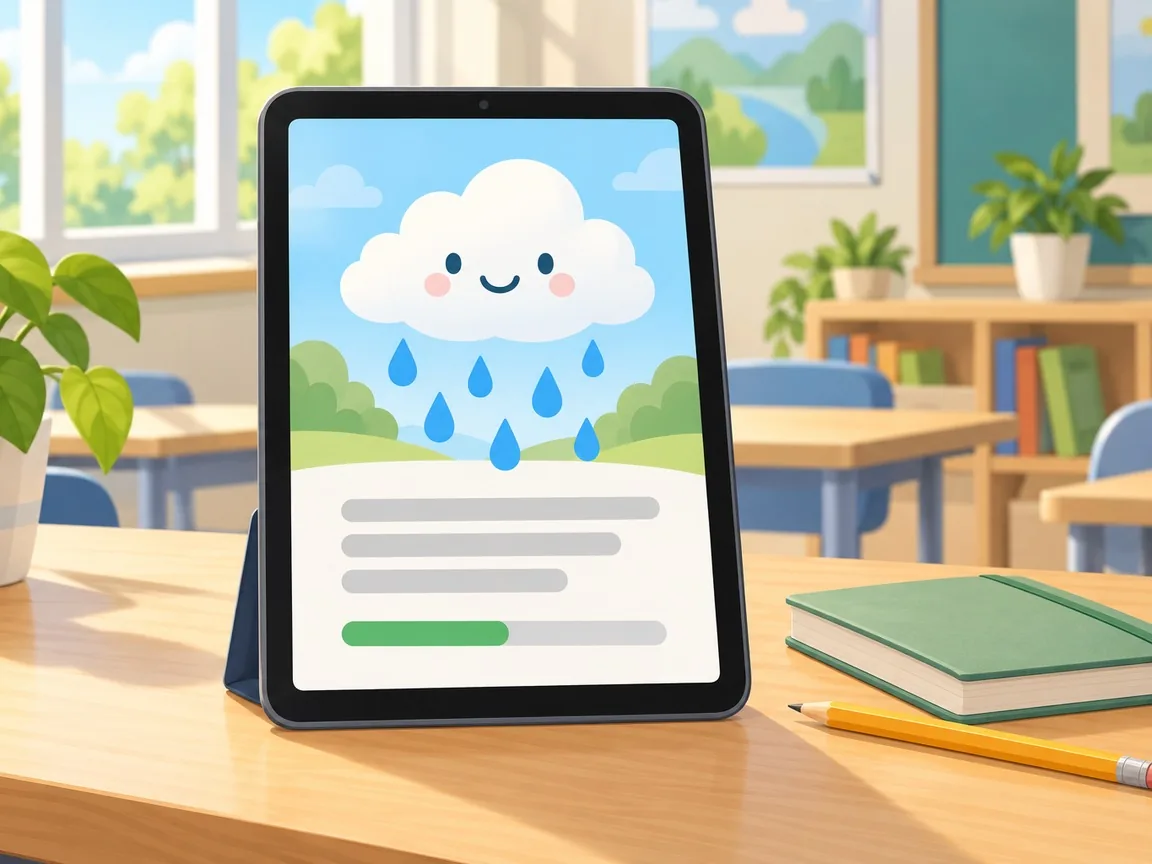
Short lessons
One idea per lesson, illustrated and narrated.
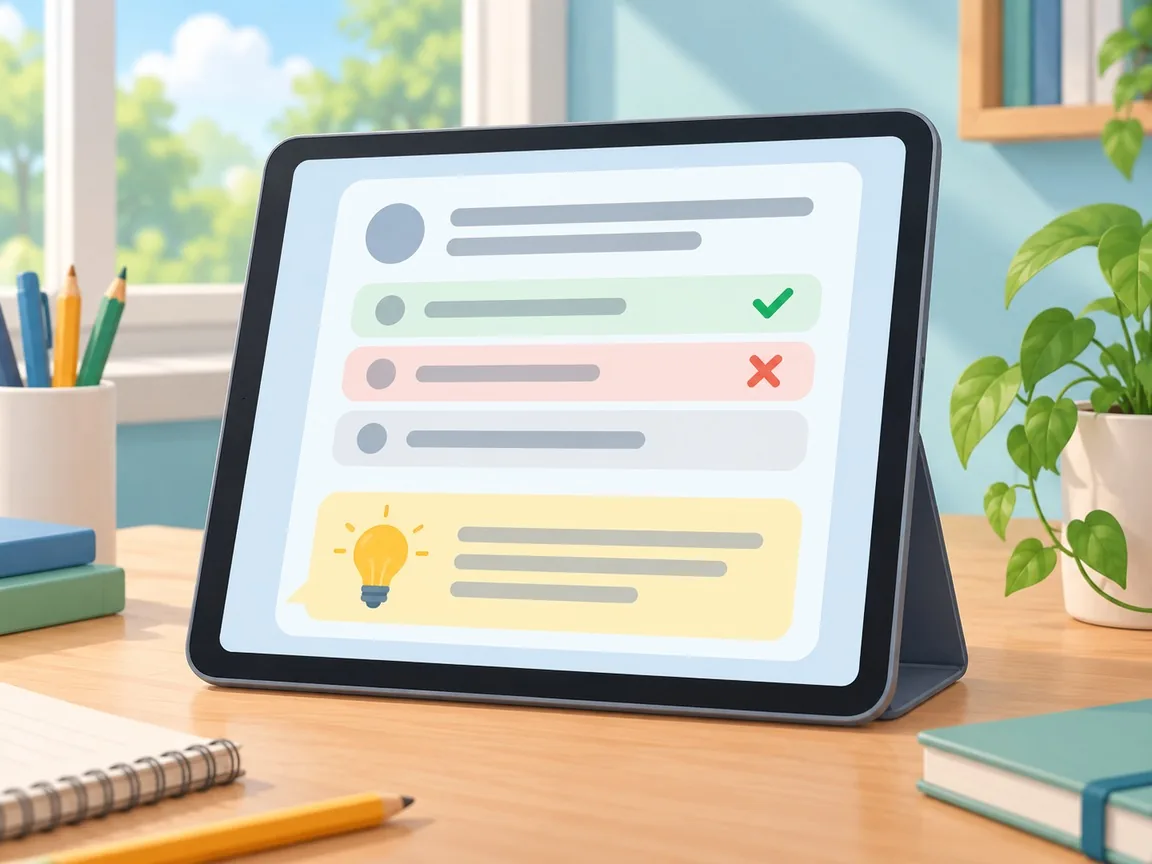
Questions with explained answers
So that a wrong answer still teaches something.
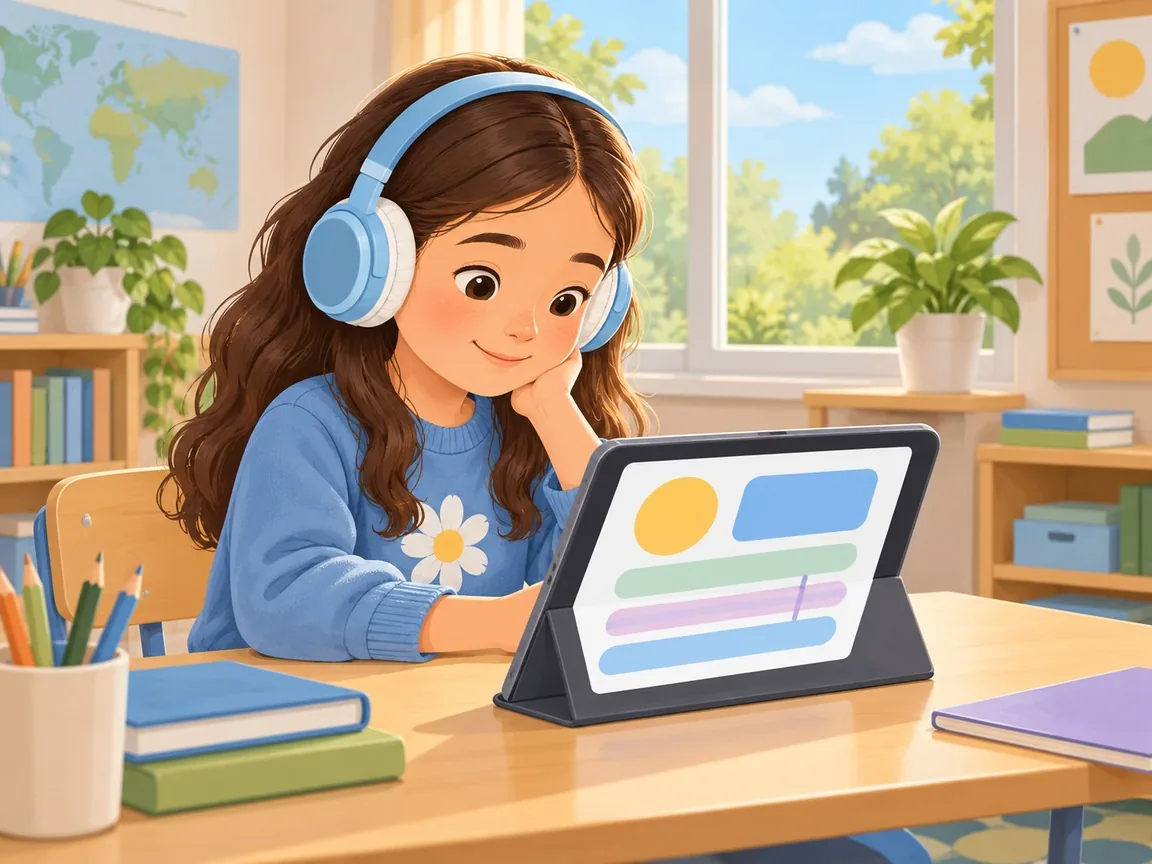
Accessible versions
Simplified text, larger type and audio for every lesson.
03 Sample module
How the water cycle works
-
1
Evaporation: where the puddle goes
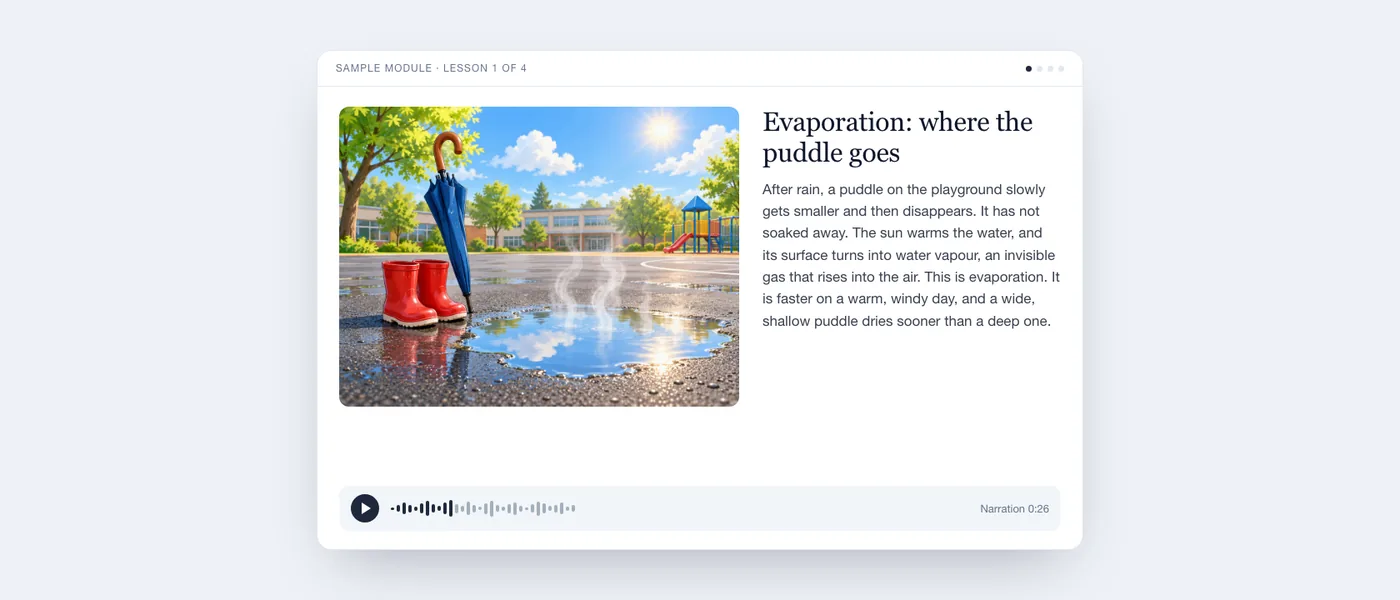
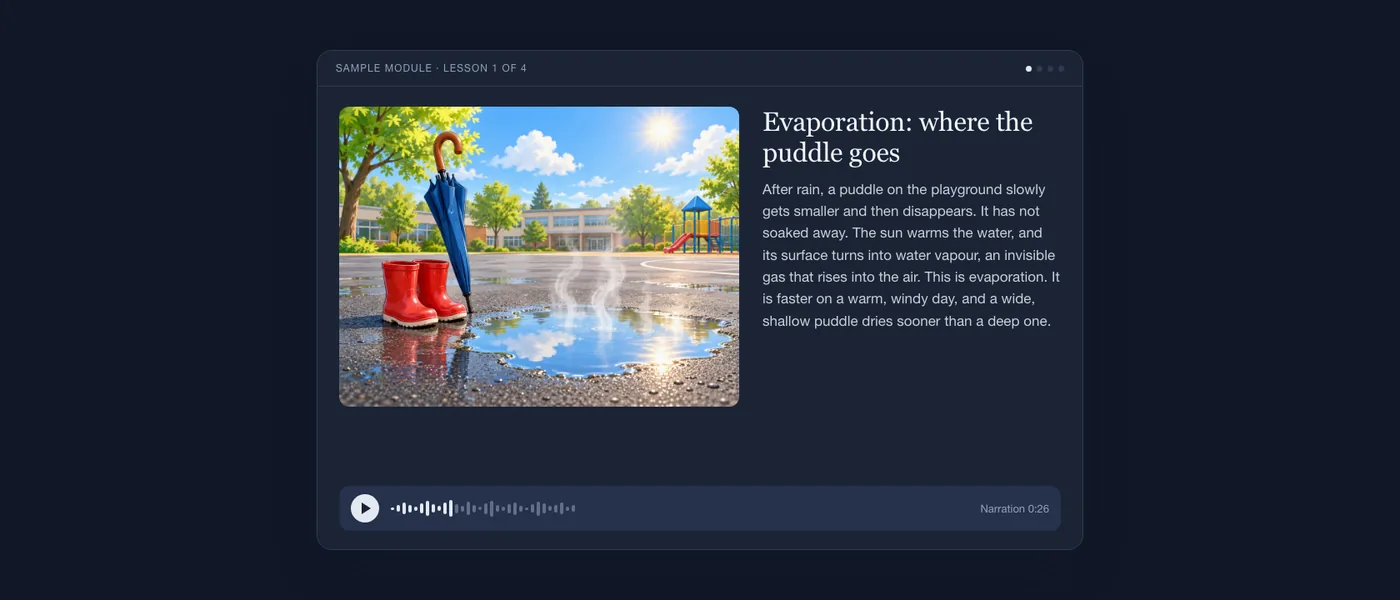
After rain, a puddle on the playground slowly gets smaller and then disappears. It has not soaked away. The sun warms the water, and its surface turns into water vapour, an invisible gas that rises into the air. This is evaporation. It is faster on a warm, windy day, and a wide, shallow puddle dries sooner than a deep one.
Narration, 0:26 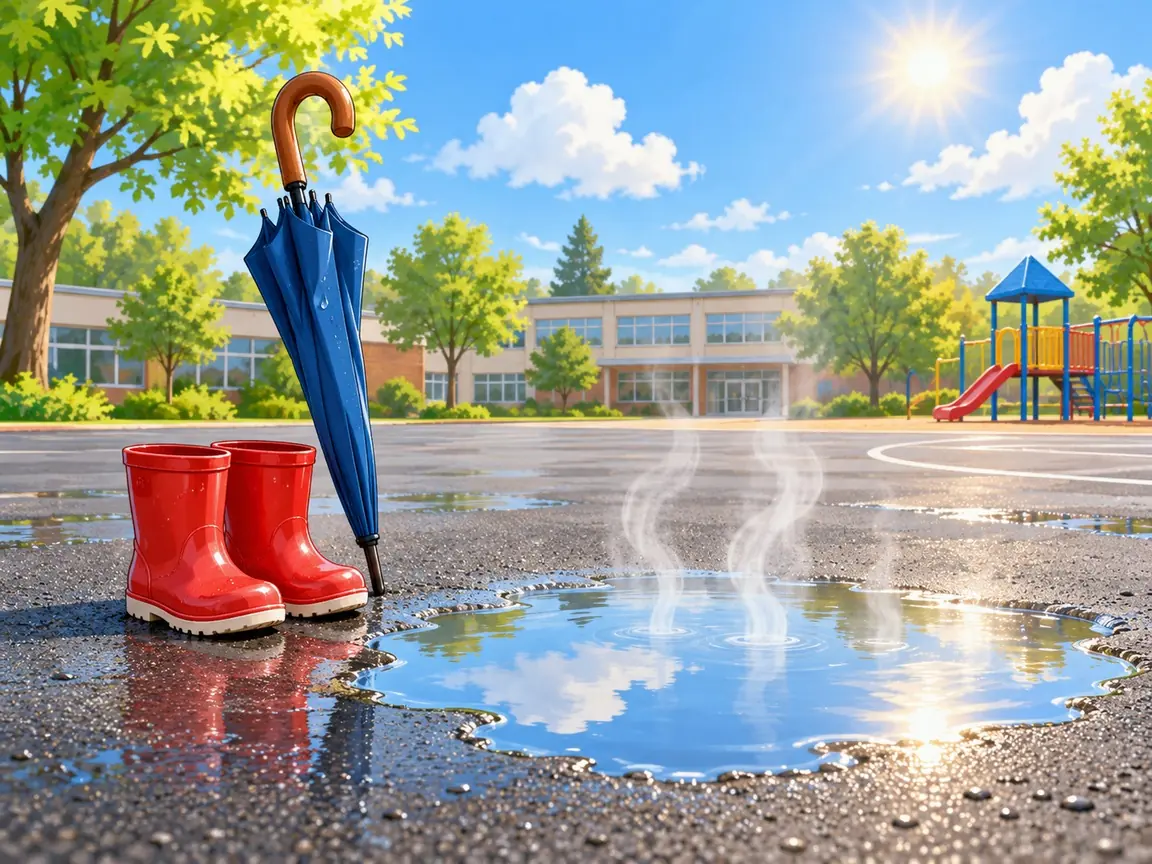
-
2
Clouds and condensation
As water vapour rises, the air around it gets colder. Cold air cannot hold as much vapour, so the vapour turns back into tiny drops of liquid water. This is condensation. Billions of these drops gather together, and that is what a cloud is: not smoke, but a floating crowd of drops too small to fall.
Narration, 0:23 
-
3
Rain, snow and hail
When the drops in a cloud bump into each other, they join and grow heavier, until the air can no longer hold them up. They fall as rain. If the cloud is cold enough, the water freezes into ice crystals and falls as snow. Hail forms when strong winds carry raindrops up into freezing air again and again, adding an icy layer each time.
Narration, 0:25 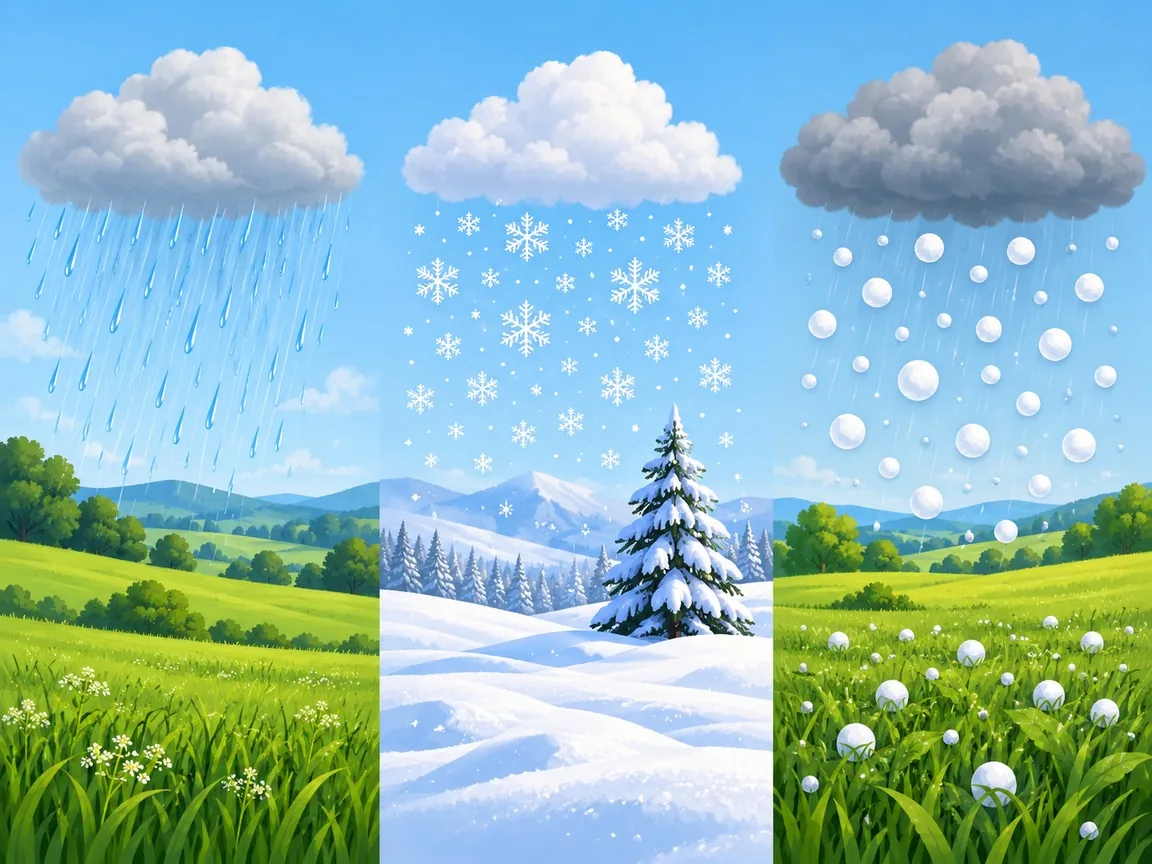
-
4
Put the cycle in order
Now it is your turn. The water cycle has four steps: evaporation, condensation, precipitation, meaning rain, snow or hail, and finally collection, when the water runs into rivers, lakes and the sea. Start with the step where the sun warms the water, then follow the water round. Drag the four steps into the right order.
Narration, 0:25 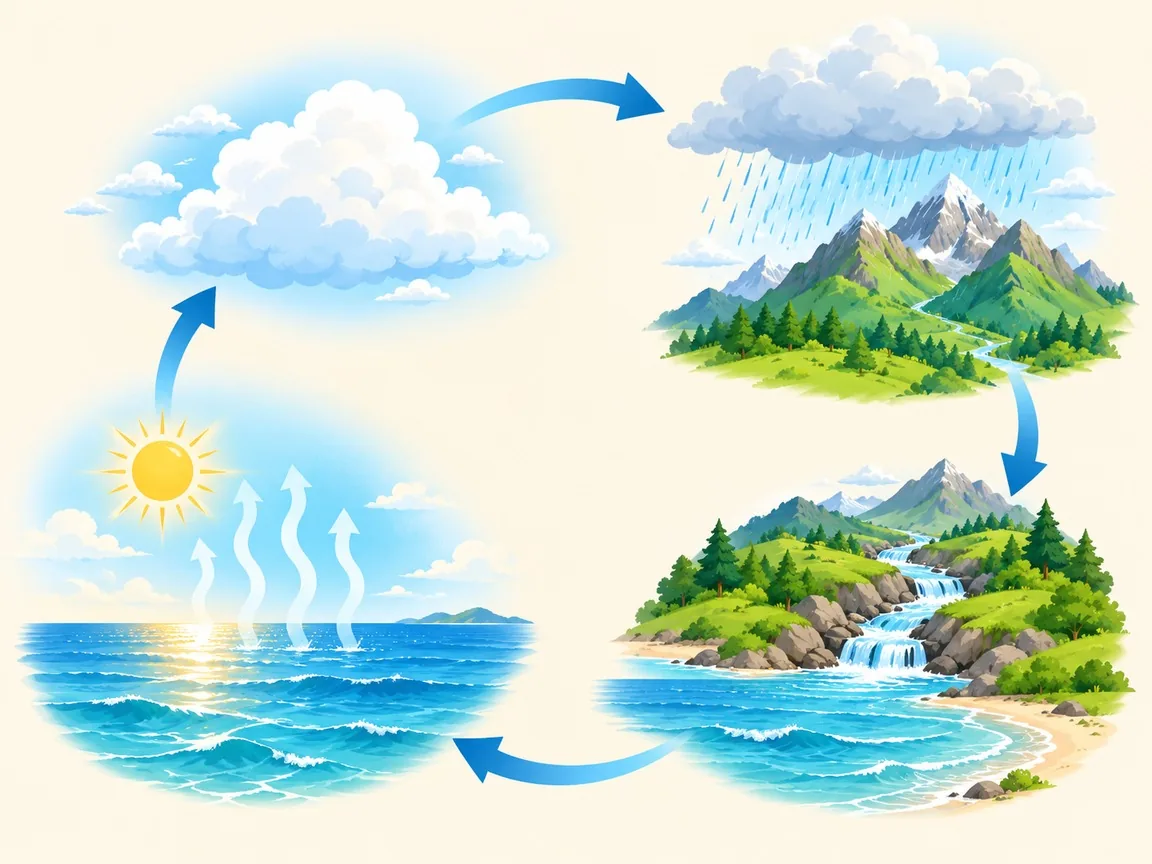
Demos for other sectors
- Nurseries and preschools Picture cards and stories read aloud, for children who cannot read yet. See the demo
- Vocational institutes Real work situations, explained step by step. See the demo
- Factories and manufacturing Work instructions operators understand on their first shift. See the demo
- Tech and IT companies Onboarding and product knowledge, written from your own docs. See the demo
- Health and safety training Mandatory topics told through the situations your people face. See the demo
- Healthcare and care homes Clear procedures for teams that work in shifts. See the demo
- Retail and customer service Product and service training for every store and every new hire. See the demo
- Marketing and creative teams Brand rules and agency know-how that new creatives learn in days, not months. See the demo
- Public administration and municipalities Clear answers for citizens, for the website, the lobby screen and the counter. See the demo
- Sports clubs, associations and events Rules and briefings that every participant understands before the start. See the demo
- Safety and compliance for multilingual teams Safety lessons that every worker understands, in their own language. See the demo
- Youth sports clubs: safeguarding and parents The club's code of conduct, explained to coaches, parents and young athletes. See the demo
- Another sector? Tell us who has to learn what, and we will tell you how we would do it. Contact us
Tell us what your people need to learn.
A 30 minute call is enough to understand whether it fits, and to give you a scope and a price for a pilot module.
- Company
-
ITALIO SRL
Via Emilia Ospizio 16, 42122 Reggio Emilia (RE), Italy