Procedures your operators understand on their first shift.
We turn your manuals, work instructions and safety rules into short visual lessons in the languages spoken on your floor. When a line or a procedure changes, only the affected lessons are updated.
- Learners
- Operators, shift leaders and maintenance staff, often in several languages
- Typical topics
- Onboarding new operators, Machine setup and changeover, Quality checks and defect handling, Lockout, tagout and protective equipment
- Sample module
- Changeover on a packaging line
01 Topics
What we usually cover
- 1 Onboarding new operators
- 2 Machine setup and changeover
- 3 Quality checks and defect handling
- 4 Lockout, tagout and protective equipment
Any other subject works the same way: from your documents or from a brief.
02 Formats
What works best for these learners

Visual work instructions
Photos or illustrations of each step, with one short sentence.

Multilingual narration
The same lesson read in every language your teams speak.
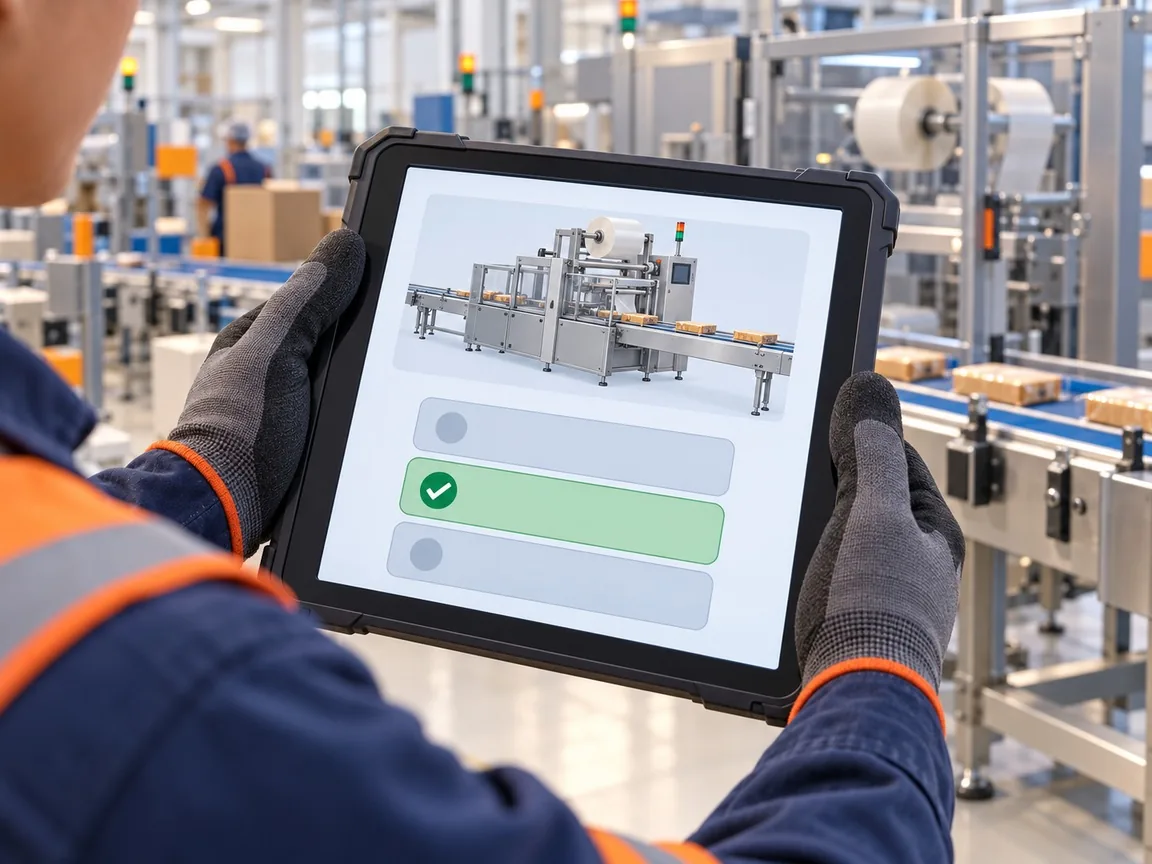
End-of-lesson checks
A few questions to confirm the procedure is clear.
03 Sample module
Changeover on a packaging line
-
1
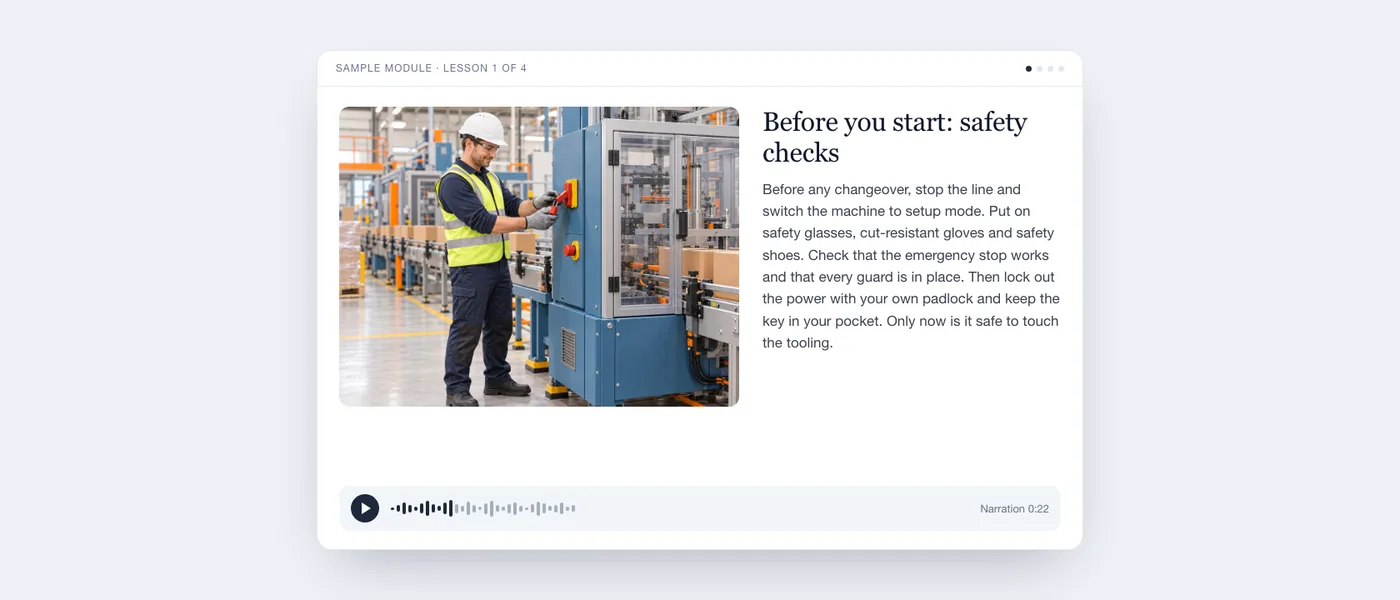
Before you start: safety checks
Before any changeover, stop the line and switch the machine to setup mode. Put on safety glasses, cut-resistant gloves and safety shoes. Check that the emergency stop works and that every guard is in place. Then lock out the power with your own padlock and keep the key in your pocket. Only now is it safe to touch the tooling.
Narration, 0:22 
-
2
Removing the old tooling
If the sealing jaws are still warm, let them cool first. Loosen the clamps in the order shown on the card, never all at once. Hold the heavy sealing unit with both hands, or ask a colleague to help, and lift with your legs. Place it on the tooling cart, not on the floor, and tag it with the product name.
Narration, 0:21 
-
3
Setup and first piece inspection
Fit the new tooling and tighten the clamps to the marked position. Remove your lock, restart the line at low speed and run three packs. Take the first pack and compare it with the reference sample. The seal must be closed and flat, the date clear, and the weight inside the range on the sheet. If anything looks wrong, stop and call your shift leader.
Narration, 0:24 
-
4
Spot the mistake in the photo
Look at the photo of the line just before restart. Something here is wrong. Is a guard left open, a spanner still lying on the machine, or a glove too close to the rollers? Take your time and find it. Then say what you would do first. If you are not sure the machine is safe, never start it. Stop and ask.
Narration, 0:23 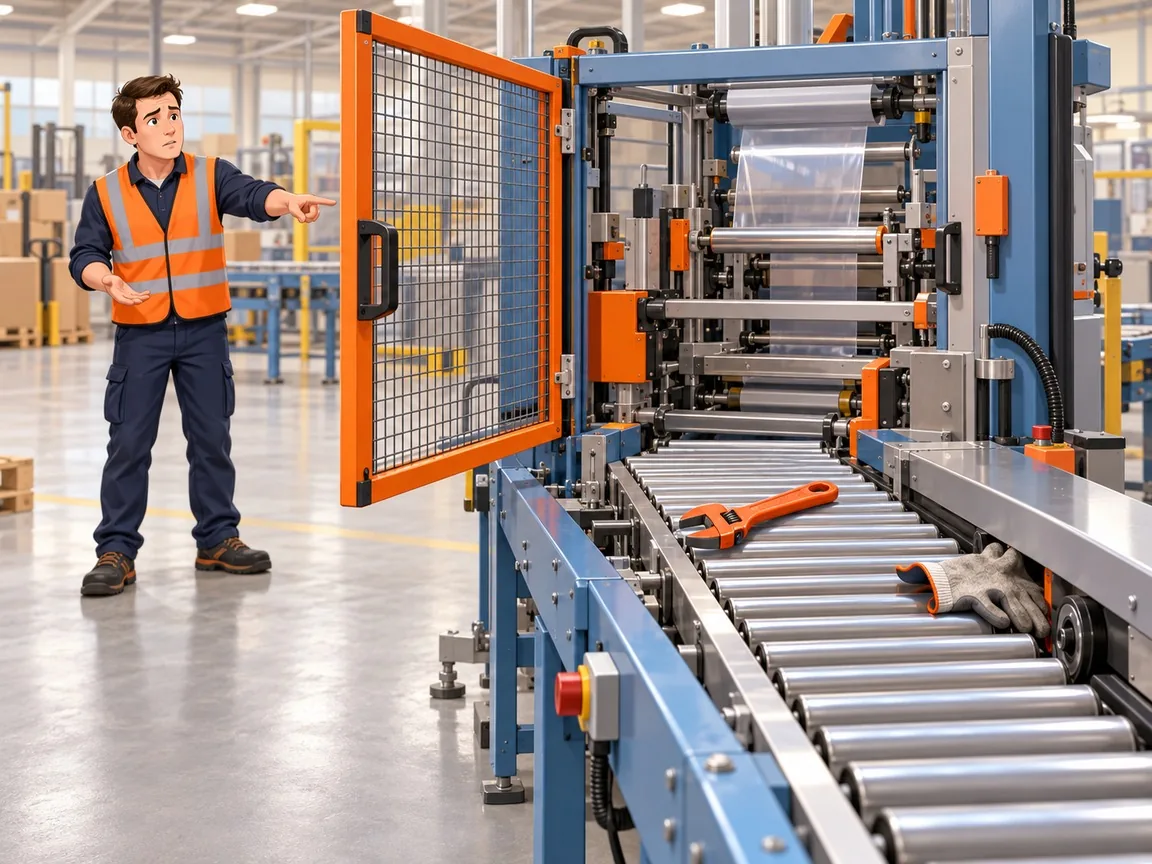
Demos for other sectors
- Nurseries and preschools Picture cards and stories read aloud, for children who cannot read yet. See the demo
- Primary and secondary schools Lessons that follow the curriculum, with checks and accessible versions. See the demo
- Vocational institutes Real work situations, explained step by step. See the demo
- Tech and IT companies Onboarding and product knowledge, written from your own docs. See the demo
- Health and safety training Mandatory topics told through the situations your people face. See the demo
- Healthcare and care homes Clear procedures for teams that work in shifts. See the demo
- Retail and customer service Product and service training for every store and every new hire. See the demo
- Marketing and creative teams Brand rules and agency know-how that new creatives learn in days, not months. See the demo
- Public administration and municipalities Clear answers for citizens, for the website, the lobby screen and the counter. See the demo
- Sports clubs, associations and events Rules and briefings that every participant understands before the start. See the demo
- Safety and compliance for multilingual teams Safety lessons that every worker understands, in their own language. See the demo
- Youth sports clubs: safeguarding and parents The club's code of conduct, explained to coaches, parents and young athletes. See the demo
- Another sector? Tell us who has to learn what, and we will tell you how we would do it. Contact us
Tell us what your people need to learn.
A 30 minute call is enough to understand whether it fits, and to give you a scope and a price for a pilot module.
- Company
-
ITALIO SRL
Via Emilia Ospizio 16, 42122 Reggio Emilia (RE), Italy